Spanish Major Daphne Nwokibe at UVA
Daphne Nwokibe C'25, a Spanish major, entering UVA law school reflects on how her education from Sewanee and UVA inspireds her life of service to the community.
Studying Spanish at Sewanee gives you language skills, access to Spanish-speaking cultures, improved cultural literacy, intercultural communication competency, a deeper understanding of the political, social, and intellectual history of Europe, Latin America, and the United States, better writing and problem-solving skills, and the ability to analyze texts, film, art, and other forms of cultural expression.
With about 500 million native speakers, including more than 40 million in the United States, Spanish is one of the most commonly spoken languages in the world and the non-English language most in demand for employment. Knowing Spanish will open up opportunities to work, study, research and travel abroad and domestically and to meet people from different cultural backgrounds. Some of our majors and minors are most interested in gaining linguistic proficiency; others want to experience life-changing works by great artists from Miguel de Cervantes to Pedro Larraín. Our program provides students the best of many worlds.
Spanish department faculty hails from Latin America, Spain, and the U.S., speaks with a variety of regional accents, and teaches and conducts research in a wide range of geographies, time periods, and critical approaches. We teach Spanish at every level, from introduction to the language to advanced seminars in literature and culture.
Students at Sewanee will find many opportunities for Spanish language immersion and cultural experiences outside the classroom. Students can work the University farm, do yoga, or eat lunch while practicing Spanish. Our students have sung karaoke in Spanish, run with (fake) bulls, and reenacted the game show Sábado gigante.
At the Spanish House, six undergraduate residents live in a communal setting overseen by a graduate native speaker. The house sponsors a weekly Spanish language table at the dining hall and hosts cultural and social activities on campus. The department employs a team of tutors and conversation partners offering help and opportunities for meaningful communication. University faculty, staff, and independent student groups regularly organize guest speakers, art exhibits, film screenings, and other events related to Spanish-speaking and Latinx culture. The E.L. Kellerman Language Resource Center further supports Spanish students. Our community engagement course partners with Latinx community groups a short drive from Sewanee.
Sewanee graduates secure positions in a variety of fields. Some you would expect, others are a bit of a surprise. Sewanee prepares you for your profession and your passion. Below is a sampling of recent graduates' first jobs.
Sewanee graduates enjoy extraordinary acceptance rates to top graduate and pre-professional programs–about 95 percent to law school and over 85 percent to medical school. Below is a sampling of where Sewanee grads continue their education.

In collaboration with Rhodes and Centre, Sewanee has a semester program in Ecuador, which explores various environmental challenges of today and tomorrow through an integrated lens of science and humanities in place-based courses.
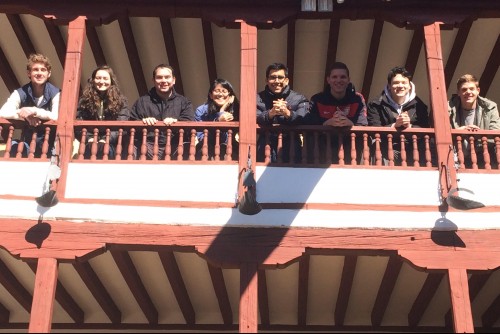
This semester abroad focuses on contemporary Spain and its membership in the European Union. The trip and accompanying courses take an interdisciplinary approach, encompassing a variety of perspectives. This semester abroad has been conceived and designed for all Sewanee students interested in Spanish culture, life, and language.
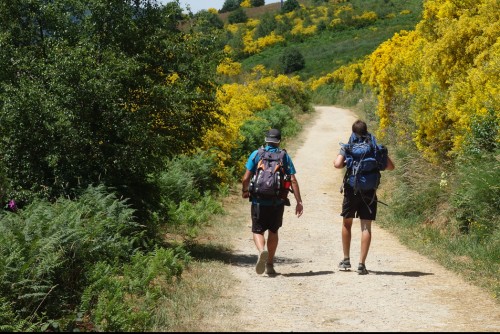
The Summer in Spain program takes a close look at Medieval Spain and the pilgrimage route to Santiago de Compostela. Classes meet in Sewanee, in Madrid, and various spots on the pilgrimage road in northern Spain. Get ready for an interactive learning experience full of discovery.
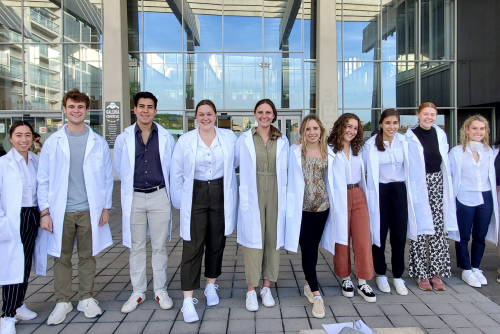
The Sewanee Spanish Immersion in Healthcare program includes both a course in Spanish and the opportunity to shadow doctors in a public hospital in Spain. In addition to reviewing and consolidating vocabulary and grammar relevant to health professions, the course examines the cultural determinants of health. Students work directly with doctors in different hospital units and meet with professors to reflect upon the experience.
A study of diverse ways in which Latin American literature and culture have portrayed the relationship between humans and the natural environment. Students study texts, films, and other materials from selected geographic regions to foster understanding of the cultural, political, and ecological history of environmental issues in Latin America.
Based on theoretical approaches and following a chronological order, this course examines and analyzes a series of visual and auditive artistic manifestations developed by Latin American cultures. Topics include the painting, sculpture, architecture, and music of the Indian Baroque; the Casta Paintings; Mexican Muralism; the rise of the Bolero; photojournalism; the Third Cinema and the documentary tradition; the dictatorship aesthetic; the identity politics of telenovelas (soap operas); and pop music.
This course covers the evolution of the detective novel from after the death of Franco to the present day. It studies the changes in Spanish society through the Transición to the new democratic government.
A civic engagement course that examines displacement in the Hispanic world in its theoretical and experiential dimensions. The course analyzes literary and cultural products from the Hispanic world, while participating in community engagement with the Latinx community on the Cumberland Plateau. The aim of the course is to develop an understanding of the individual and collective aspects of migration and exile beyond the text; to reflect on the ethnic and sociocultural diversity of the area, and to develop civic awareness.
Requirements for the Major & Minor in Spanish
Do you need to be placed in a different level of Spanish? Please fill out the replacement form.
For Tutoring Schedules and more, visit the Spanish Resources Page
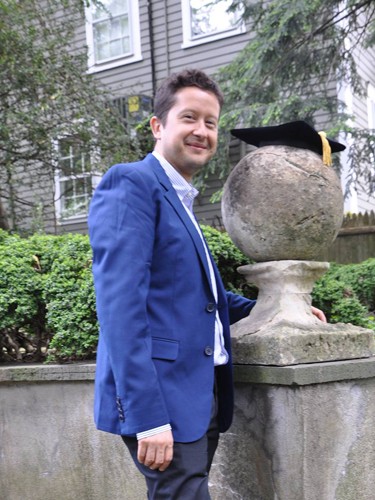
Arturo Márquez Gómez was born and raised in Santiago, Chile. In 1997 he started his studies in Psychology at the Universidad de Chile. As a Psychologist he worked as a research assistant in gender studies and HIV-AIDS prevention at FLACSO- Chile. In 2002 he decided to switch careers and joined a Master program in Spanish at Middlebury College. Right after graduating in 2006 he started his graduate studies in the Hispanic Studies Department at Brown University, from where he graduated in 2013. In his dissertation titled "Disaster and Deviance: Narratives of the Catastrophe in Contemporary Chile", he explored the works of the writer José Donoso, the performer and cronista Pedro Lemebel, and film director Pablo Larraín. His research and teaching interests include all levels of Spanish, contemporary Latin American narratives, visual studies, cinema, documentary, film adaptations and performance arts. He looks forward to teach courses on Visual Studies on the context of Latin American artistic production, Hispanic American Cinema, Film Adaptation, panoramic literature surveys and more specific literature seminars centered on contemporary authors or topics such as gender and sexuality, memory and Latin American cities.
Professor Burner specializes in nineteenth- and twentieth-century Latin American literature and culture. She is interested in how cultural production can offer insight into economic and environmental concerns of the past and present, including financial crisis and the depletion of natural resources. Her dissertation, “Fertilizer Dreams: Peruvian and Chilean Culture of the Guano and Nitrate Eras,” analyzes novels, short stories, and newspaper articles written during periods of economic boom and bust driven by the export of fertilizer from Latin America to Europe.
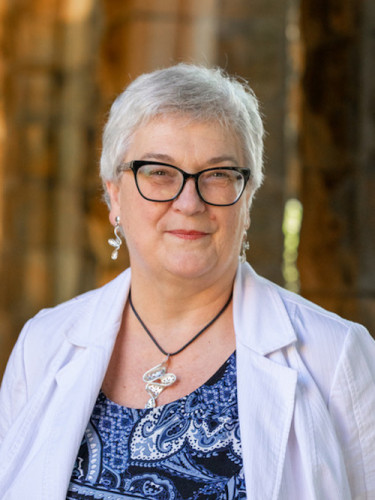
A native of Valencia, Spain, Ruth Sánchez-Imizcoz spends most of her time between Spain and Sewanee, where she has been teaching since 1995. Most of her scholarly work deals with a 17th-Century Spanish drama, mostly with the entremeses and with the works of Agustín Moreto in Spanish and in translation. She is the author of the book, El teatro menor en la España del siglo XVII: La contribución de Agustín Moreto and has written several scholarly articles that deal with race, the influence of Don Quijote in British literature, and the presence of women in the 17th century. Professor Sánchez also co-directs the Sewanee Semester in Spain in Madrid.
Professor of Spanish, Chair of the Spanish Department
Gailor Hall 229, Ext. 1174
Daphne Nwokibe C'25, a Spanish major, entering UVA law school reflects on how her education from Sewanee and UVA inspireds her life of service to the community.
Learn more about the program in Ecuador to learn about environmental challenges while perfecting your Spanish.
Come meet the Spanish House residents and find out what events they have planned for this year!
The Department of Spanish and Italian participated in Scholarship Sewanee for the second consecutive year with three presentations by its majors. Presenting at Scholarship Sewanee is part of the Honors requirements in our department, and is also an opportunity to showcase our students' work, which we consider a clear demonstration of their engagement with Hispanic and Latinx cultures.
Faculty, family members, and other students gathered to hear these students' presentations, which explored innovative ideas and concepts. Samantha Ude presented "Representaciones del extractivismo y de los indígenas en el 'documental verde' de Ecuador," Daphne Kwobike presented "Una travesía solitaria: Narrativas sobre la migración infantil en la frontera del sur de Estados Unidos," and Maren Johnson presented "Trabajo en crisis: neoliberalismo y cultura audiovisual en España contemporánea." It is an honor for our department to actively participate in our students' intellectual growth. Congratulations!
The governance of global digital platforms is a central problem in the contemporary global political economy. As states and regional blocs experiment with new forms of digital regulation, Big Tech firms operate across an increasingly fragmented and uneven regulatory landscape. They are not merely regulated entities but transnational actors capable of shaping, reinterpreting, and, at times, co-producing regulatory outcomes across jurisdictions.
This talk advances Global Studies by reframing digital regulation as a site of global contestation rather than national rulemaking, emphasizing how corporate power operates across borders and institutional scales. It bridges legal analysis and political economy by integrating insights from institutional legitimacy theory, corporate political activity, and dynamic capabilities, demonstrating how firms learn from regulatory encounters and build repeatable strategies to manage governance shocks. It contributes to discussions on regulatory sovereignty by demonstrating how state authority is mediated by corporate adaptation, especially in contexts where regulatory capacity is uneven across the Global North and Global South.
Dr. Sebastián Figueroa will deliver a talk, "Salt of the Future: on Lithium, Art, and Resistance" which explores the intersections of lithium extraction, art, indigenous cultures, and environmental concerns in the Atacama Desert in South America.
As part of the featured talk organized by Art History professor Dr. Leslie Todd titled “Mediators of the Sacred: The Southern Andean Religious Tradition and the Viceregal Cult of Angels”, presenter Dr. Maya Stanfield-Mazzi visited Dr. García-Santana’s class. Students learned about linguistic aspects of archival work and the relevance of textiles in ritual practices.
International students Nahuel Martínez and Dante Chamorro Studenko gave a presentation in Dr. García-Santana’s class. They shared customs from Paraguay in the context of learning about the Jesuit missions of Guarani Paraquaria.
The development of 'cuir' (queer) music video and their influence on contemporary films was the topic of the presentation given by professor Arturo Márquez-Gómez at the Universidad de Santiago, in Chile. The presentation, titled "Y el video musical creó el filme: Nunca vas a estar solo (2016) de Alex Anwandter/ And the music video created the fim: Alex Anwandter's You will never be alone (2016)", analyzed the particular use of music in the film that freely adapted a well-known homophobic murder in Chile in 2012. Márquez-Gómez argues that the previous experience of the director, Alex Anwandter, in directing music videos is fundamental to create effective 'musical moments' (Amy Herzog, 2009) in the film. In the musical moments, the narration is suspended and the audience is able to connect to affective and creative dimensions of the characters. Márquez-Gómez's presentation was based on a previously published chapter titled “Video Built the Cinema Star. Alex Anwandter’s Nunca vas a estar solo” published in Chilean Cinema in the Twenty First Century World (2020) edited by Vania Barraza y Carl Fischer.
Dr. Lisa Burner will give a talk on November 9 at the University of Tennessee at Chattanooga about her research entitled, Gold or Guano? Fictions of Resource Extraction and Sustainability in Latin America, which examines if natural resources a blessing or a curse as expressed in Latin American fiction in the 19th and early 20th centuries.
Read more to see the schedule for Spanish Table, free tutoring in the Language Resource Center and when you can go to Spanish language yoga classes.

To create an immersive learning experience, Sewanee has several language houses (French, German, Russian, Spanish, and Italian) that simulate real-world language and cultural encounters. The head resident is a native speaker, and students speak their house language while “at home". Events throughout the year showcase educational and recreational aspects of the language house and the culture it represents.

International & global studies at Sewanee stretches far beyond the gates. Involving faculty members from departments across the College, the program spans disciplinary and thematic boundaries. The rapid pace and complex nature of our world require dexterity to navigate. At Sewanee, you will study the ever-changing political, economic, and cultural issues that characterize our world today. Here, experiencing the real world begins in the classroom.

At Sewanee, we pledge to offer each student an opportunity to study abroad. And at Sewanee, we keep our promises. Travel, learn, and cultivate your knowledge by communicating across cultures and acquiring a sensitivity to other ways of life. Apply social scientific methodologies to various frameworks. Learn to formulate solutions to global problems and apply those theories at home in a local context.