Sewanee Students Win Critical Language Scholarships
Students at Sewanee have won critical language scholarships through the U.S. Department of State's Critical Language Scholarship Program in languages such as Arabic, Chinese, Korean, & Russian.
Russia is the meeting point of East and West. It’s a powerful and complex country on the rise again in many ways—economically, politically, and technologically—and its mother tongue is a language of undeniable importance.
As the fifth most widely spoken language in the world (with 277 million speakers) and one of the six languages of the United Nations, Russian is a powerful language in a changing world. Fluency in Russian can pave the way for a variety of career paths. Scientists, policy-makers, engineers, analysts, entrepreneurs, and language specialists all benefit from a mastery of this global language.
Whether you decide to study Russia because of its rich history, literature, colorful culture, Nobel Prize winners, current socio-political configuration, or growing role in business and the energy sector, you can expect an engaging curriculum here at Sewanee. You’ll learn to speak, read, and write Russian. You’ll learn the country’s customs and its influence on dance, drama, film, literature, mathematics, music, and physics. You’ll even get to experience the culture and friendly conversation in Russian at the Russian House on campus.
Sewanee graduates secure positions in a variety of fields. Some you would expect, others are a bit of a surprise. Sewanee prepares you for your profession and your passion. Below is a sampling of recent graduates' first jobs.
A survey of Russian cinema from the 1920s to the present day. Students acquire a cinematic vocabulary while studying the genesis of Russian cinema, montage, propaganda films and socialist realism, nationalism, Stalinism, the post-Soviet period, and the enormous Russian and Soviet impact on world cinema.
This course surveys the major novels of Fyodor Dostoevsky, including Crime and Punishment, Notes from Underground, The Brothers Karamazov, and others. In examining Dostoevsky's reputation and legacy as a psychological novelist, the course explores the author's treatment of politics, religion, philosophy, and ethics.
This course examines the relationship between individuals and the state in Putin's Russia. Students analyze a variety of texts dealing with the chaos of the "wild 1990s," Putin's subsequent solidification of power, and the rise of a prominent protest culture. A special area of focus is the Euromaidan revolution and the ongoing "hybrid war" in the Donbas, Ukraine.
mpreslar@sewanee.edu
Gailor Hall 222, Ext. 1517
esweygan@sewanee.edu
Gailor Hall 220, Ext. 1367
Students at Sewanee have won critical language scholarships through the U.S. Department of State's Critical Language Scholarship Program in languages such as Arabic, Chinese, Korean, & Russian.
Multiple generations of Russian students met at McClurg for lunch to hear about the exciting life and experiences of Nathan Bourne (C’11), a triple major (Russian/Philosophy/Environmental Studies) with special interest in environmental Russian literature and the culture and ecology of the Caucasus. During his time at Sewanee Nathan participated in the Sewanee Summer in Russia program and spent a summer living in St. Petersburg. After graduating, he spent a year teaching English in the Republic of Georgia and traveling around the Transcaucasus—including a thru-hike of the Janapar Trail in Nagorno-Karabakh (Artsakh). Nathan is an Episcopal priest currently serving at St. George’s Church in Durham, NH, where he draws on his love of Russian literature, art, and iconography to inform his ministry. His Russian isn’t what it once was, but he still draws on it when the opportunity arises.
On October 20th Susanna Weygandt shared at the Faculty/Student research celebration some of the seminal material for her digital humanities project, "Translational Docudrama and the Art of Resistance in Eastern & Central Europe and Russia." She will build the platform as a scholar at the Kennan Institute. Her platform includes the essence of proper DH projects: a search engine, unique archive, and collaboration. Her student, Juliane Purves C' 24, translated the documentary drama Motovilikh Worker (2011, Andrei Rodionov and Mikhail Durnenkov) that will be housed on the platform.
Dr. Yuliya Ladygina will deliver a talk entitled, "Hauntology, Ruins, Macabre, & a Promise of a Brighter Future in Valentyn Vasyanovych's Atlantis (2019)" In her presentation, Dr. Ladygina will share her ongoing research on Valentyn Vasyanovych's internationally acclaimed film Atlantis (2019), which evokes bombed-out postwar Ukraine of 2025, an imagined universe victorious in its war with Russia but left in total societal, economic, and environmental wreckage. Utterly haunted by ruins, unburied dead, and ubiquitous phantoms of repressed pasts and promised but aborted futures, the film offers a sobering representation of highly complex dimensions of Ukraine's post-Soviet and wartime experiences that invites a thorough hauntological consideration. Using Jacques Derrida's critical approach to history and its ability to haunt and thereby influence contemporary society, Dr. Ladygina will position Atlantis as not only a powerful anti-war text but also a pertinent reflection on Ukraine's ongoing struggle to forge a new vision for its political future. Vasyanovych's use of macabre images and aesthetic choices associated with the phenomena known as "ruins port" will be of particular interest in that regard. In her discussion of Vasyanovych's illustrative narrative strategies, Dr. Ladygina will draw on Kate McLoughlin's influential study of literary representations of war and several critical texts dealing with de-industrial representations.
Dr. Weygandt has used theatre to teach Russian. She describes her approach to seeing students' Russian improve as they learn grammar and stage a production in her recent publication, "Ludic Acts of Language Acquisition: Role, Dialogue, and Stage for L2 Russian Oral Proficiency" in Dynamic Teaching of Russian: Gamification of Learning, eds. Nuss & Kogan, 2024. Thanks to students in RUSN 311 and in RUSN 402 for participating in two productions.
Students in Dr. Weygandt's popular RUSN 203 (17 students) in fall 2023 would apply their Russian to hands-on and creative activities around Sewanee's campus during the course's weekly lab hour. One lab, for instance, took place at the Ralston Listening Room, where students identified recently learned grammar topics in classic rock and electronic rock of the Soviet Union's 1980s while singing along to unforgettable lyrics. At the University Art Gallery, students talked about the exhibition by Sisavanh Phouthavong Houghton, "Glimpses of Lives Interrupted." Each student identified a painting (картина) to marvel at with their partner. Using the accusative and the dative, they share their opinion of the painting, offering a soft critique. Shapes (квадрат, точка, линия, треугольник,круг, форма) and colors (жёлтый, красный, оранжевый, чёрный, белый, голубой, зелёный, розовый,фиолетовый, серый) were discussed, as well as the genitive singular and plural to ask and answer such questions as Какого цвета этот треугольник? Сколько линий в этой картине? Сколько кругов в этой картине? Сколько формв этой картине?
Having heard that translators and interpreters were in short supply at the primary transfer point of refugees flowing into and out of Poland, Dr. Mark Preslar and assembled a team of 7 Russian Speakers from among his graduates, including two Ukrainian speakers. Virtually all Ukrainians speak Russian fluently. After extensive planning, fundraising, and acquiring necessary supplies for Ukraine, the team met at the airport in Krakow, Poland, checked in with the Make a Difference Foundation, and immediately went to the Tesco Refugee Center and got to work. Read the full account.
The Russian Table will meet every Wednesday at noon outside at the patio of McClurg (and on the balcony in case of bad weather.) Read more to find out about the tutoring, gaming, and yoga schedule for this semester.
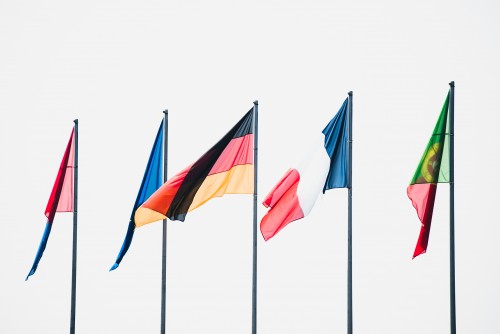
To create an immersive learning experience, Sewanee has several language houses (French, German, Russian, Spanish, and Italian) that simulate real-world language and cultural encounters. The head resident is a native speaker, and students speak their house language while “at home". Events throughout the year showcase educational and recreational aspects of the language house and the culture it represents.
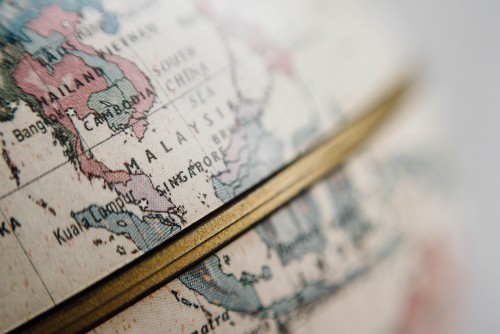
International & global studies at Sewanee stretches far beyond the gates. Involving faculty members from departments across the College, the program spans disciplinary and thematic boundaries. The rapid pace and complex nature of our world require dexterity to navigate. At Sewanee, you will study the ever-changing political, economic, and cultural issues that characterize our world today. Here, experiencing the real world begins in the classroom.

At Sewanee, we pledge to offer each student an opportunity to study abroad. And at Sewanee, we keep our promises. Travel, learn, and cultivate your knowledge by communicating across cultures and acquiring a sensitivity to other ways of life. Apply social scientific methodologies to various frameworks. Learn to formulate solutions to global problems and apply those theories at home in a local context.