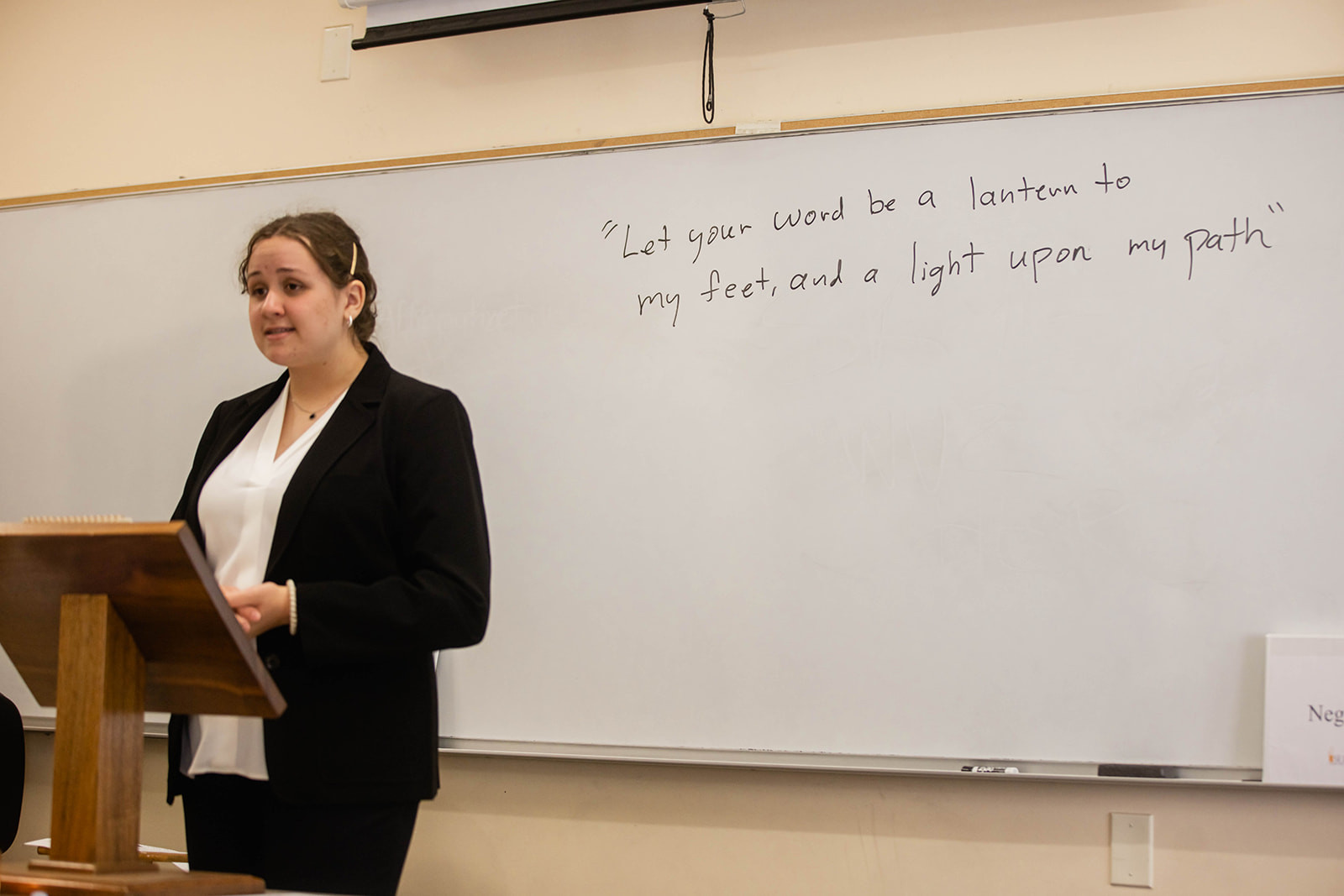
"I've always been nervous about public speaking, but after camp, I realize the power and impact my voice can have."
– Zenobia from Little Rock, AR
Frequently Asked Questions
I have no debate experience. Can i still apply to summa?
Yes, we hope you will! SUMMA is open to debaters at all levels, including no experience. Novice debaters will have the opportunity to learn the fundamentals of "theological debate" with award-winning professors and practitioners sensitive to the natural anxiety that comes with speaking in public. Seasoned debaters will benefit from the opportunity to consider anew how "debate" and "speaking truth in love" can co-exist when our contemporary models of public discourse often reflect a rancorous, less nuanced, and less loving approach to controversial topics.
how will i learn to do "Summa-style" debate?
For the first full five days of camp, SUMMA debaters will attend a 60-minute debate lecture led by Dr. Melody Lehn. These lectures focus on how different religious traditions come to bear on the camp resolution, while tackling more broadly the question of "faith seeking understanding." Debate lectures provide the basic fundamentals of theological debate, writing and revising speeches, and engaging opponents through cross-examination while, at the same time, "speaking truth in love." Lectures are interactive and meant to help prepare participants not only for debating at SUMMA, but also for speaking effectively and ethically as engaged citizens in their homes, schools, congregations, and communities.
What style of debate do SUMMA campers do?
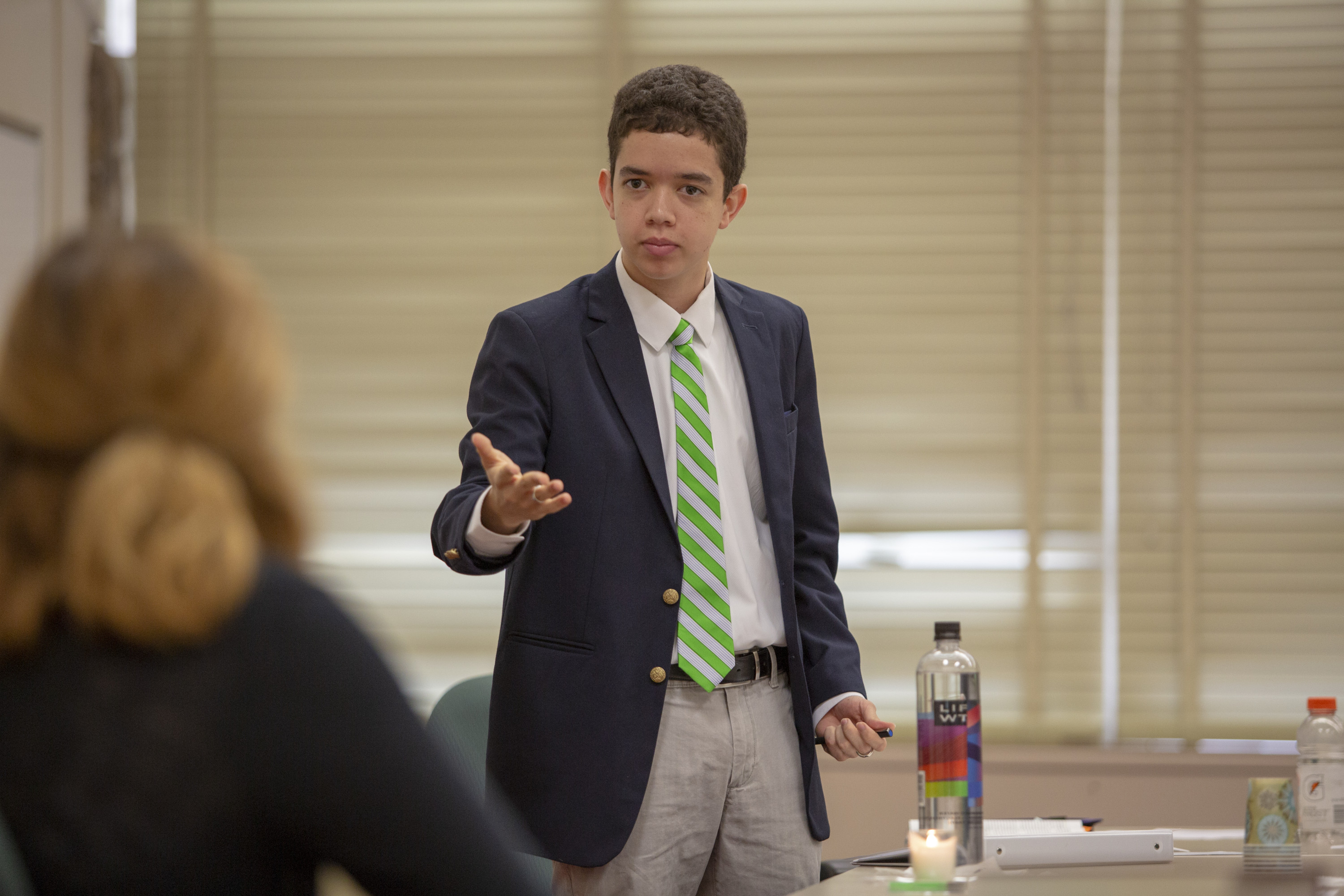
SUMMA debaters use a modified and adapted version of Lincoln-Douglas style debate that includes Affirmative and Negative constructive speeches, cross-examination, and rebuttal.
What do SUMMA campers debate about?
Each year at SUMMA, campers arrive and the top-secret camp resolution is unveiled at the Opening Orientation. The resolution is a values-based proposition that has to do with a contested, many-sided theological question. This resolution is the sole topic of debate for that particular camp session. Debaters spend several days researching the different sides of the resolution and prepare cases to argue in favor of the resolution (The Affirmative position) or against the resolution (The Negative position). At the end-of-camp tournament, campers will be prepared to argue both sides of the resolution across several rounds.
How many times will I debate?
Each SUMMA camper debates at least three, and sometimes four, times in the end-of-camp tournament. Debaters argue each side (Affirmative or Negative) at least once.
What are some past SUMMA resolutions?
- Without faith in God, humanity cannot flourish.
- The use of artificial intelligence (AI) is unChristian.
- Conservation is the best kind of environmental stewardship for creation care.
- Separation of church and state is best for the state and best for religon.
- Civil disobedience is morally justified.
- Outside the church, there is no salvation.
- Churches should be gun-free zones.
what is a "Team"?
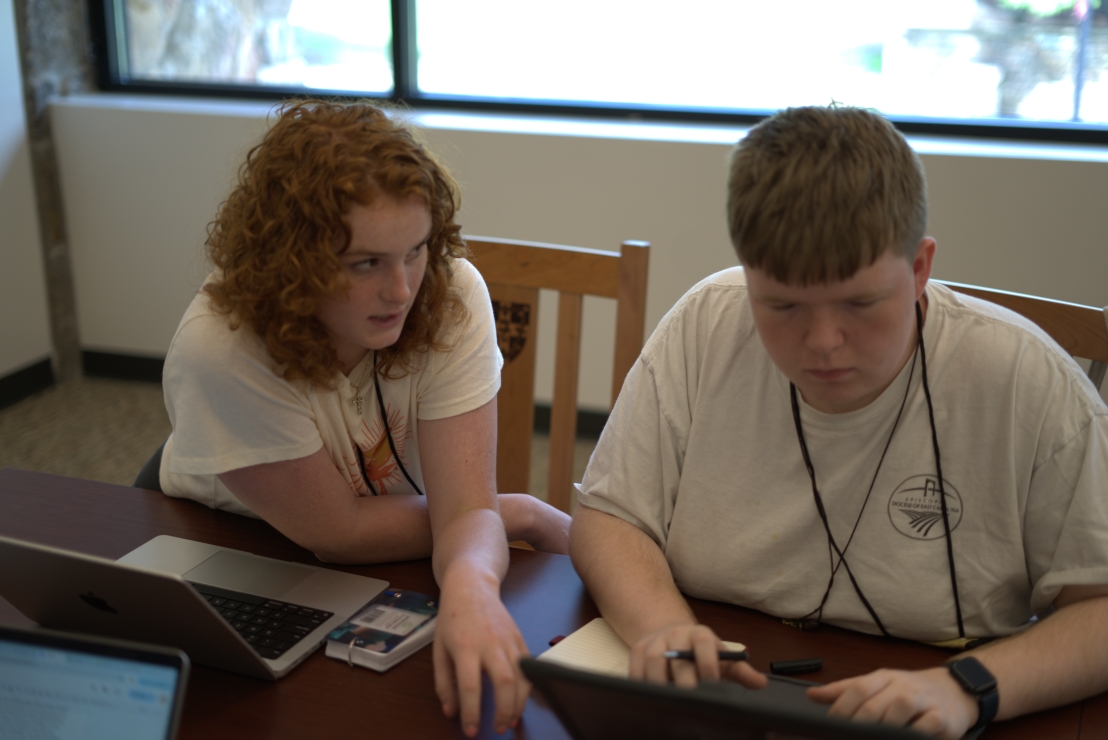
SUMMA campers are placed in one of several Teams that provide a supportive community for campers to discuss debate strategies, share research, develop arguments, and practice speeches. Campers do not debate a member of their Team. For the first five days of camp, Teams briefly meet with their counselor in the afternoon following lectures for guidance on how to use preparation time to their advantage.
do i debate as a solo debater or in Pairs/teams?
SUMMA campers debate as solo debaters in our end-of-camp tournament, but prepare for that tournament in Teams that explore ideas, research together, test arguments, and compete together for the "Tournament Champion" award. Campers on the same Team do not debate each other at SUMMA.
What is the end-of-camp debate tournament?
During the last two full days of camp, we hold our end-of-camp debate tournament. Staff members serve as judges, and campers debate both sides of our camp resolution. The first half of the tournament is closed to the public, while the second half is open to family, friends, guests, and the University community. The tournament is held in Hamilton Hall (School of Theology) classrooms.
How are debaters judged and scored?
At SUMMA, we judge debaters on eight (and as needed for a tiebreaker, nine) criteria.
- The debater met the burden of proof (presenting a cohesive case for/against the resolution);
- The debater met the burden of rejoinder (engaging and responding to the arguments of their opponent);
- Organization (arranging arguments in a clear, coherent, and memorable fashion);
- Informative with respect to Scripture (citation of Scripture);
- Informative with respect to the Christian theological tradition (citation of Christian thinkers, texts, and sources);
- Informative with respect to other fields of knowledge (citation of secular sources, such as academic disciplines and fields of inquiry);
- Spiritually grounded (modeling "speaking truth in love" while engaging your opponent);
- Delivery (elements of voice, body, and movement);
- Tie-breaker (if needed, based on the best use of humor, creativity, and imagination).
is there internet and printing access on campus?
Yes! We are a wireless campus and all SUMMA campers will be able to use internet while here. Campers will have access to computers and printing in duPont Library. Log on to wi-fi under "Sewanee guest" once you arrive. Printing support is available at camp for your debate materials.
can i bring a laptop to camp?
Yes, in fact, we highly recommend that you do. But if you do not have a laptop, that is fine and you can still do well at camp. SUMMA reserves a limited number of laptops from our technology department, and these are available to campers during the program.