English Courses
ENGL101: English and Composition
Foundational Writing Intensive (GFWI)
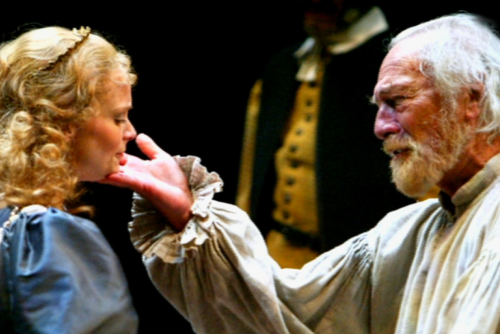
English 101 will set you to work planning, writing, and revising essays of various lengths, practicing a handful of essential skills that make for clear and persuasive writing. The content of each courses differs widely, from medieval poetry to contemporary drama, from African-American memoir to speculative fiction.
See the Registrar's Page for Times
ENGL200: Representative Masterpieces
Not Writing Intensive
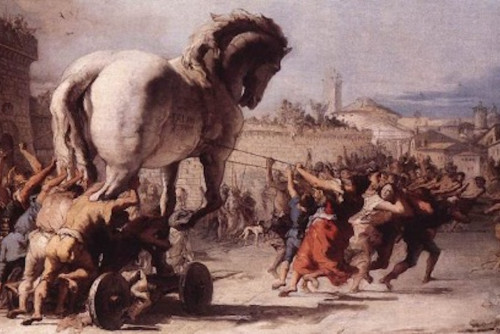
In Representative Masterpieces we explore the epic tradition, moving from Homer’s Iliad to Dante’s Divine Comedy. Beginning with the first and greatest of all war stories, the Greek army’s decade-long siege at the gates of Troy, we will trace the reverberations of violence through the lives of the leading warriors and their families. From there we embark on a journey with Dante from the dark wood of human weakness to the luminous heights of heaven, as the poet's memory and imagination range across the spectrum of feeling from erotic beauty to visceral horror. Though different in countless ways, these poems are united in offering comprehensive visions of the trials, sufferings, and possibilities of human life itself.
MW 3:30 - 4:45 PM
Taught by Ross Macdonald
ENGL212A: Black Lit Bryond Print
Foundational Writing Intensive (GFWI)
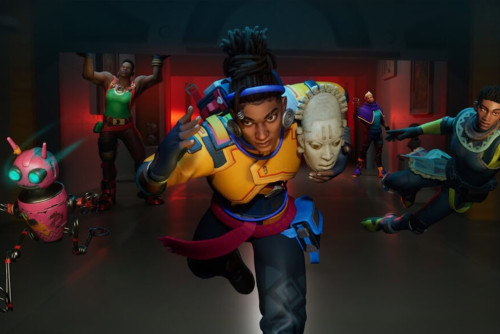
This course examines how Black cultural production uses multimodal, visual, spatial, and interactive storytelling to create, circulate, and preserve Black stories across history and into the twenty-first century. Across four units - comics, exhibitions, video games, and social media - students explore works by African American and diasporic creatives with hybrid racial, national, and ethnic identities. The first unit pairs Whytmanga’s Apple Black with Ebony Flowers’s Hot Comb to introduce Afro-anime, a subgenre of Afrofuturism. The second features a virtual tour of the Met Gala’s Harlem Renaissance and Transatlantic Modernism exhibition and the catalog for Hans der Kunst’s 2017 exhibition Postwar: Art between the Pacific and the Atlantic (1945–1965), co-curated by Okwui Enwezor, Katy Siegel, and Ulrich Wilmes. The third unit approaches narrative-driven video games as literature, examining storytelling, characterization, thematics, and world-building through games such as Momo Pixel’s Hair Nah, Tales of Kenzera: Zau by Surgent Studios, Relooted by Nyamakop, Danfo Run by Opeyemi Adeniran, and Lagos Life by Shalom Rayhamen. The final unit explores digital storytelling through fictive tweets, Instapoetry, digital performances, and multimedia narratives, including Ifedayo Agoro’s The Diary of a Naija Girl and Mike Maphoto’s Diary of a Zulu Girl. In each unit, students analyze and discuss primary texts and secondary materials, select works of personal interest for further study, write short critical essays, and present their findings in class. The course will also feature at least two guest lectures by Black artists working in the forms we study. For the final project, students will work in groups of four to develop creative projects corresponding to the course’s four units: a comic zine, a 2D video game, an exhibition proposal or short catalog, and a social media page curating the digital literary practices of selected Black creatives. These projects will be made publicly accessible by the end of the course. Ultimately, the course challenges conventional definitions of literature by treating these forms as developed literary systems with distinct narrative logics and aesthetic conventions. It also prepares students to engage critically with Black cultural production beyond traditional publishing.
MWF 11:00 - 11:50 AM
Taught by Funmi Akinpelu
ENGL212B: Frankenstein: Origins and Afterlives
Not Writing Intensive
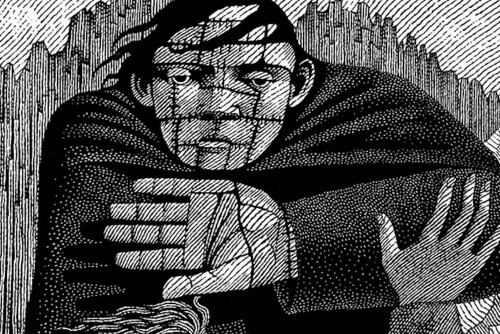
This course is an introduction to literary history via Mary Shelley’s perennially fascinating novel. In addition to reading the novel itself through a variety of critical lenses, we will explore its source material in Greek mythology, the Faust legend, Milton, Romantic poetry, and eighteenth-century science. We will also examine the afterlives of the story through various films and novels of our own time.
TR 11:00 AM - 12:15 PM
Taught by Jennifer Michael
ENGL301: Old English Language and Literature
Not Writing Intensive
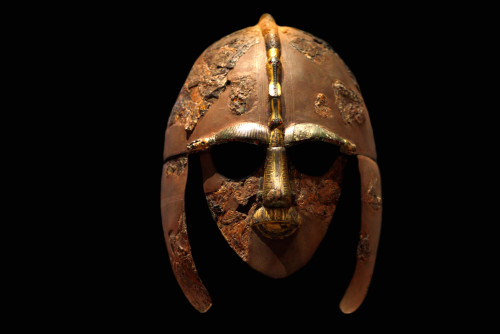
This course is an introduction to Old English, the language spoken in (what would become) England between the 5th – 11th centuries. Students will learn pronunciation, vocabulary, and grammar as they read a variety of works written in Old English, both prose (including selections from The Anglo-Saxon Chronicle) and verse (including "Cædmon's Hymn," "The Dream of the Rood," "The Wanderer," "The Battle of Maldon," and selections from Beowulf).
MWF 8:00 - 8:50 AM
Taught by Alex Bruce
ENGL338: Border Fictions: Literature of the U.S.-Mexico Border
G7: Encountering Perspectives
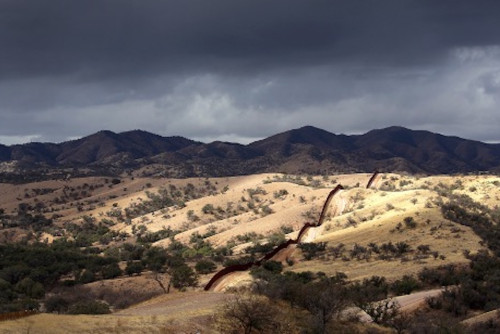
The border between the United States and Mexico was formalized by the Treaty of Guadalupe Hidalgo, which ended the Mexican-American war in 1848. But it had been a space of conflict and controversy for decades by then, as the promise of land and opportunity brought Anglo-Americans in increasing numbers into territory that had previously been claimed by indigenous tribes, European empires, and the newly emerged Republic of Mexico. This course, which includes fiction, nonfiction, and poetry by Anglo- and Mexican-American writers, will focus on the moral and political meaning of the border and the cluster of ambitions and desires that has inspired border-crossing, in both directions, for two centuries. Writers to be considered may include María Ruiz de Burton, Katherine Anne Porter, Américo Paredes, Sandra Cisneros, Oscar Casares, Luis Alberto Urrea, Gloria Anzaldúa, and Cormac McCarthy.
MWF 10:00 – 10:50 AM
Taught by John Grammer
ENGL358: Shakespeare's Late Tragedies and Romances
Women's and Gender Studies
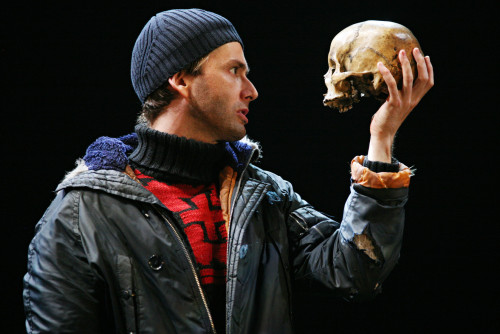
This class will consider the plays written by Shakespeare after 1600 through a variety of lenses: as cultural artifacts of Elizabethan England; as scripts that have truly only lived, and continue to live, in performance; as an ongoing source of inspiration for us as we continue to make culture anew; and as brilliant works of dramatic poetry. The instruction method is guided discussion, sometimes student-led, with occasional brief lectures. While the foundation of our work will always be careful close-reading, we will also think about reception, considering the implications of performance for our understanding of what Shakespeare might have meant to his contemporaries, and what he continues to mean (and what we make him mean) to us. The through-thread of performance analysis includes discussing and analyzing filmic interpretations, culminating in students creatively collaborating scenes.
MWF 10:00 AM - 10:50 PAM
Taught by Kelly Malone
ENGL362: Milton
GMWI: Writing Intensive in the Major
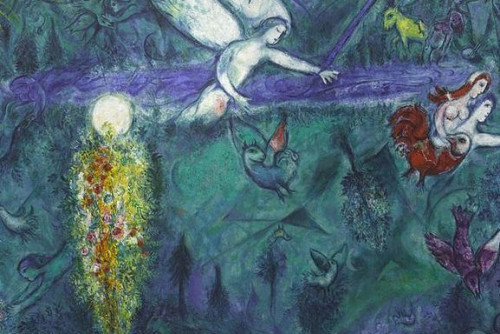
In English 362, we examine the varied works of John Milton (1608-1674), poet, polemicist, and revolutionary. Beginning with Milton’s youthful experiments across different modes and genres of lyric verse, we turn to the radical political tracts of his middle years as a context for Paradise Lost, an epic that brings together poetry, philosophy, theology, and science to undertake a task no less ambitious than “to justify the ways of God to men.” The course comes to a close with extended attention to Milton’s late masterpieces, Paradise Regained and Samson Agonistes, which represent the culmination of his lifelong concerns yet also a profound questioning of his own settled views.
TR 11:00 AM - 12:15 PM
Taught by Ross Macdonald
ENGL369: Authority and Authorship in 18th Century Britain
Not Writing Intensive
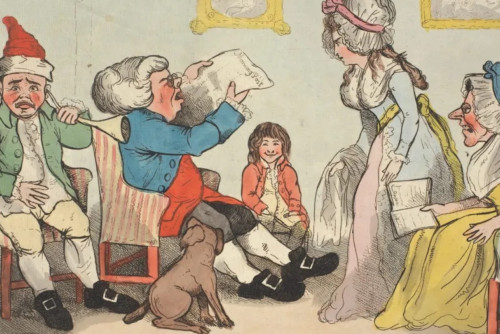
This course explores radical shifts that occurred in English literature during the late eighteenth century. What changed was not only style, subject matter, and poetic theory, but also the role of the author and the social purpose of writing. We’ll examine the preoccupations of the period through both “major” and “minor” authors, male and female, Black and white, not only individually, but also as part of a complex revolution in cultural taste and literary practice. We'll read a tabloid-style "true crime" biography by Samuel Johnson, a satire of London dating culture by Eliza Haywood, and a narrative of enslavement by Olaudah Equiano, just to name a few.
MWF 9:00 - 9:50 AM
Taught by Jennifer Michael
ENGL374: The Victorian Novel
Not Writing Intensive
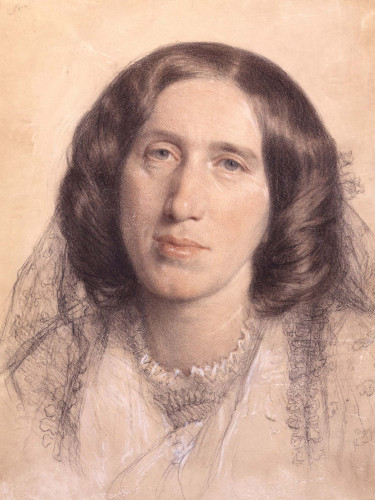
Whether in lively vignettes of gossiping neighbors, gripping tales of social ambition, or Gothic visions of lovers prowling the moors, Victorian novels immerse us in worlds and lives that feel as real as our own. Crucially, though, they are not—not ours, and not real. It is in the space between these dimensions—the familiar and the strange, the actual and the imagined, the singular and the universal—that the Victorian novel unfolds. We will trace the narrative structures, techniques of representation, genre tropes, thematic preoccupations, and cultural contexts of nineteenth-century British fiction through the work of several major authors: Charles Dickens, Charlotte Brontë, George Eliot, Thomas Hardy, and Oscar Wilde. Marrying an intense focus on the inner life with wide-ranging social scope, their books ask enduring ethical and existential questions: What do we owe other people? How do we measure social progress? Is the present forever haunted by the past? Are human beings creatures of self-determination or fate? As we explore these imagined worlds, we will pay special attention to the fellow-feeling that binds individuals together in Victorian fiction—as well as the hostile impulses that drive them apart. Doing so will show us what Victorian novelists knew well: that literary narrative theorizes the world by representing it, and thereby offers a unique mode of social, psychological, and moral insight.
MW 2:00 – 4:15 PM
Taught by Maha Jafri
ENGL378: American Literature from 1850-1900
Not Writing Intensive
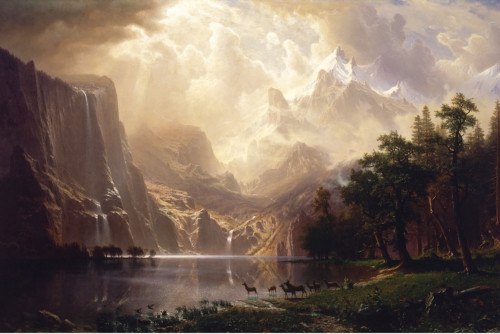
Like Abraham Lincoln’s announcement of “a new birth of freedom” in the Gettysburg Address, the American literature covered in English 378 struggles to articulate, then problematize, American freedom in the era surrounding the Civil War and emancipation. What is freedom? To whom does it extend? What are its blessings and its costs? Nobody has ever thought more profoundly about these issues than the American writers who emerged before, during, and after the war America fought with itself: Nathaniel Hawthorne, Herman Melville, Harriet Jacobs, Emily Dickinson, Mark Twain, Henry James, Charles Chesnutt, Charlotte Perkins Gilman, and others.
TR 1:30 - 2:45 PM
Taught by John Grammer
ENGL383: British Fiction Right Now
GMWI: Writing Intensive in the Major
A consideration of British fiction from the last half-century, this course will put you into the most current currents of literary expression. There is no canon yet in this course, no guarantee that the books we discuss, in another century, will have been deemed The Important Books from this narrow slice of literary history. Instead, you will be invited to make and test bold claims about canonicity and how literary value is accorded and revised. What constitutes an “important” novel, or for that matter, a “British” one? Who decides? What’s the relationship among genre, the marketplace, and that slippery notion, “the literary”?
W 2:00 - 4:30 PM
Taught by Lauryl Tucker
ENGL394: Literature of the American South
Not Writing Intensive
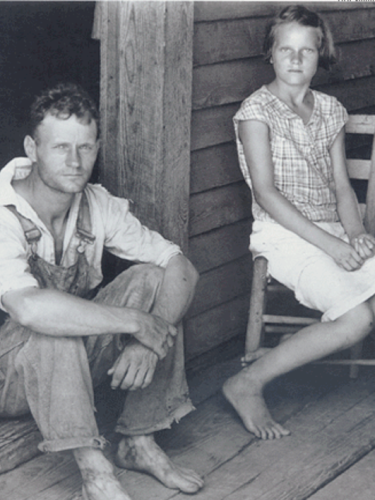
A paradox of American literary history is that the South--the poorest and least educated American region, the one beset by the most glaring injustices, the one that seemed to resist modernity most fiercely—produced the most innovative and important American writers of the twentieth century, writers like William Faulkner, Zora Neale Hurston, Eudora Welty, Flannery O’Connor, and Ernest Gaines. This course focuses most intently on their era, “the Southern renascence,” but examines its origins in the nineteenth century and its echoes in the remarkable Southern writing of contemporaries like Jesmyn Ward, Natasha Trethewey, Janice Ray, and others.
TR 9:30 - 10:45 AM
Taught by John Grammer
ENGL395: African-American Literature
Not Writing Intensive
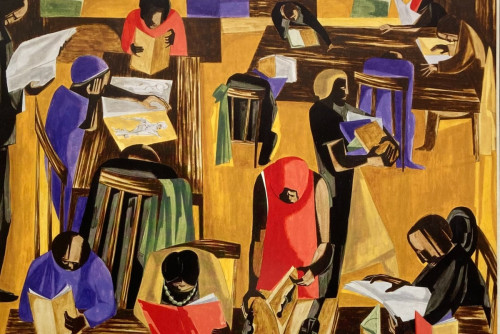
This course surveys African American literature from its earliest expressions to the twenty-first century, including spirituals, poetry, drama, autobiography, fiction, and nonfiction. Prioritizing historical grounding and breadth, the course is organized into six units, each explored over two to three weeks. The units include Entangled Histories: Africans and Native Americans in Early America, featuring excerpts from Tiya Miles’s Ties That Bind: The Story of an Afro-Cherokee Family in Slavery and Freedom, and accounts from the WPA Slave Narrative Project of Black people who accompanied Native Americans on the Trail of Tears; Narratives of Slavery by African Americans, featuring works by Phillis Wheatley, Frederick Douglass, and Harriet Jacobs; Slavery, Reconstruction, Jim Crow, and Minstrelsy, highlighting W. E. B. Du Bois’s The Souls of Black Folk and a lesson on digital Blackface; The Harlem Renaissance and the Black Arts Movement, featuring excerpts from Jean Toomer’s Cane, Zora Neale Hurston’s Color Struck, Ntozake Shange’s for colored girls, and poetry by Tennessee’s own Nikki Giovanni; From the Civil Rights Movement to Black Lives Matter: Afro-Pessimism and Afrofuturism, featuring Rivers Solomon’s The Deep; and Masculine Participation in Black Feminism, examining gendered rhetorics through excerpts from Toni Morrison’s Song of Solomon or Sula. Throughout the course, we will ask: What role has African American writing played in the struggle for political freedom and equality in the United States and beyond? How has it changed to reflect the political needs of different historical moments? How have theories and speculations about race shaped this writing, and how has writing, in turn, shaped or constructed race? How do representations of gender, sexuality, ethnicity, technology, and aesthetics contribute to Af-Am literary constructions? By connecting African American literature with early Native American literature and contemporary diasporic cultures, the course examines literature as a site where racial definitions and belonging are contested. Course requirements include participation in in-class discussions, weekly reflections on readings, an in-class midterm critical essay, history-based group presentations, an open-book exam based on history presentations, and a final creative scrapbook project.
MWF 1:00 - 1:50 PM
Taught by Funmi Akinpelu
Creative Writing Courses
WRIT205A: Beginning Poetry Workshop
Workshop
To write poetry— to as the writer Mark Doty says, translate experience into something resembling adequate language— is an act that requires rigorous vulnerability, a commitment to growth and discomfort, a belief in something a little like magic, and a devotion to language itself. In this class, students will begin to establish and explore their own poetic practice from the ground up. They will: 1) Read and write poems in a variety of forms and shapes. 2) develop a shared vocabulary for talking about poetry as a craft. 3) Practice drawing connections between the texts they read and their own creative work. 4) Respond diligently and inventively to the work of their classmates, both verbally and in writing, and in doing so become more effective artists and communicators.
M 1:30 - 4:00 PM
Taught by Molly McCully Brown
WRIT206A: Beginning Fiction Workshop
Workshop
How do we tell stories that matter? How do we make our voice heard in a way that connects us to the larger world?
If you’re interested in storytelling, the Beginning Fiction Workshop provides you with the opportunity to develop your skills, study unique and diverse stories from contemporary literature, and share and discuss creative work amongst a group of students in a welcoming space. The primary goal of the course is to help each writer find their own particular voice while utilizing distinct elements of craft. The beginning workshop allows for students to generate multiple stories over the course of the semester, and over the course of the semester we will develop a common language so we can discuss these stories with sensitivity, specificity, and generosity.
TR 9:30 - 10:45 AM
Taught by Kevin Wilson
WRIT206B and C: Beginning Fiction Workshop
Workshop
This course serves as an introduction to the nuts and bolts of fiction. Essentially, we will concentrate on how narrative works rather than what it means: as useful in helping beginning writers learn to read in a new way, namely as a writer, so as to write more proficiently. The author, R.O. Kwon has said that reading is almost more important than the writing itself for a working writer. I agree. In order to write well one MUST read well and extensively. I’d posit that there is a science to understanding how a story works, what its architecture is, and we will unpack that notion in class. This will create an awareness of the structures and strategies available in reading and writing contemporary work. Emphasis is given to understanding craft, producing original work, revision, as well as reading and discussing the works assigned and critiquing each other’s work.
MW 3:30 - 4:45 PM; MW 2:00 - 3:15 PM
Taught by Misha Rai
WRIT207: Beginning Playwriting Workshop
Workshop

Whether you are a fiction writer interested in improving your dialogue, a poet who wants to explore narrative, a theatre geek who wants to see their work come to life, or someone simply interested in trying something new, Beginning Playwriting Workshop is an excellent opportunity to explore dramatic writing in a safe and supportive environment. Emphasis is placed on promoting growth as a writer. A variety of foundational texts are read in order to develop an understanding of basic dramatic structure. Weekly writing exercises are assigned to work in concert with the plays we read.
W 2:00-4:30 PM
Taught by Prof. Meaker
WRIT210: Forms of Poetry
Forms Course
To Be determined
T 1:30 – 4:00 PM
Taught by Molly McCully Brown
WRIT250
Elective course
To Be Determined
T 7:30 - 10:00 PM
Taught by Misha Rai
WRIT305: Intermediate Poetry Workshop
Workshop
In the intermediate workshop, students expand their skills writing, reading, and critiquing poems, as well as share their writing with peers in a workshop setting. The course builds upon the basics of craft learned in the Beginning Poetry Workshop and explores more complex ways of utilizing that craft. Students read a diverse range of published poems, but the primary focus is the creation and critique of their own work and the work of their peers.
W 2:00 – 4:30 PM
Taught by Molly McCully Brown
WRIT306: Intermediate Fiction Workshop
Workshop
In the intermediate workshop, students expand their skills writing, reading, and critiquing short stories, as well as share their writing with peers in a workshop setting. The course builds upon the basics of craft learned in the Beginning Fiction Workshop and explores more complex ways of utilizing that craft. Students read a diverse range of published short stories, but the primary focus is the creation and critique of their own work and the work of their peers.
R 1:30 - 4:00 PM
Taught by Kevin Wilson
WRIT307: Intermediate Playwriting Workshop
Workshop
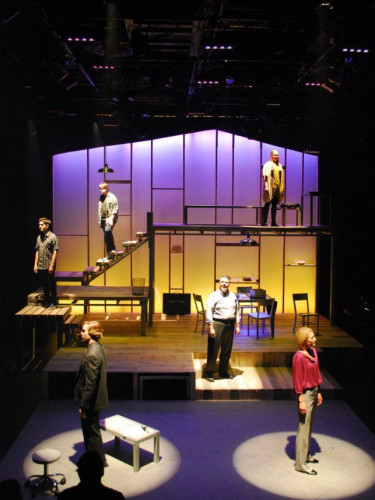
In the intermediate workshop, students expand their skills writing, reading, and critiquing dramatic work, as well as share their writing with peers in a workshop setting. The course builds upon the basics of craft learned in the Beginning Playwriting Workshop and explores more complex ways of utilizing that craft. Students read a diverse range of published dramatic work, but the primary focus is the creation and critique of their own work and the work of their peers.
M 2:00 – 4:30 PM
Taught by Prof. Meaker