English Courses
ENGL101: English and Composition
Foundational Writing Intensive (GFWI)
English 101 will set you to work planning, writing, and revising essays of various lengths, practicing a handful of essential skills that make for clear and persuasive writing. The content of each courses differs widely, from medieval poetry to contemporary drama, from African-American memoir to speculative fiction.
See the Registrar's Page for Times
ENGL212: Annihilation
Foundational Writing Intensive (GFWI)

Devastation, dystopia, and decay seem like constant features of our current discourse, but this course wants to think about annihilation, the reduction to non-existence, in ways that go beyond destruction, and which offer creative modes of literary and even religious expression. The course will be divided between Medieval and Early Modern texts, such the Old English poems “The Ruin” and “The Wanderer,” Marguerite Porete’s The Mirror of Simple Souls, films such as The Seventh Seal and Melancholia, and plays and novels by William Shakespeare, Samuel Beckett, Leonora Carrington, Anna Kavan, and Kazuo Ishiguro. The course will conclude with reading Jeff VanderMeer’s science-fiction masterpiece, Annihilation.
MWF 10:00 - 10:50 AM
Taught by Matthew Irvin
ENGL329: The Novel
Not Writing Intensive
What is a novel? And what can a novel do? A genre whose parameters prove surprisingly difficult to delineate, the novel has often been defined by its heterogeneity and adaptability. At the same time, to call a book "a novel" is to imply specific formal and conceptual criteria--historical contexts, narrative structures, stylistic techniques, thematic preoccupations--that distinguish the novel (and the vast, widely-ranging body of literature we organize under the term) from other kinds of texts. In this course, students will consider what novels are and how they work, examining works from a variety of traditions (19th-century British, 20th-century American, and 20th-century global anglophone) alongside material drawn from the critical fields of novel theory and narratology. Authors may include Jane Austen, Charles Dickens, Ishmael Reed, Salman Rushdie, and Vladimir Nabokov.
MW 2:00 - 3:15 PM
Taught by Maha Jafri
ENGL352: Chaucer
Writing Intensive in the Major (GMWI)
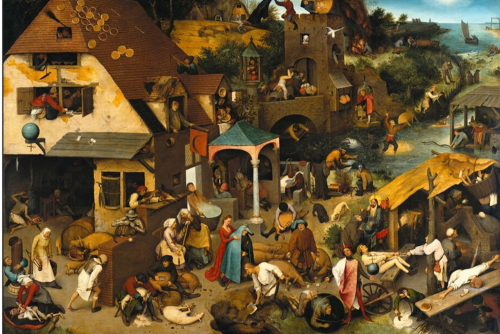
As “the father of English poetry,” Chaucer plants his poetic feet firmly in the relationships between the genders. Gender and sexuality shape his unflagging interest in how we view bodily pleasures (or their violation), to how language moves within the social space between bodies, and to how the idea of an embodied self develops from the pagan past to his Christian present. This is certainly true when Chaucer writes about romantic or sexual love, but it is also very much present when he writes about religion, politics, history, animal fables, and dream visions. In this class, we will consider how the study of Chaucer’s (often violent and disturbing) work should energize our contemporary assumptions and questions about gender and sexuality, even as we become familiar with Chaucer’s historical contexts, his language, and his engagement with the literary innovations of his day.
R 1:30 – 4:00 PM
Taught by Stephanie Batkie
ENGL357: The Early Plays of Shakespeare: Ritual and Rebellion
Women's and Gender Studies
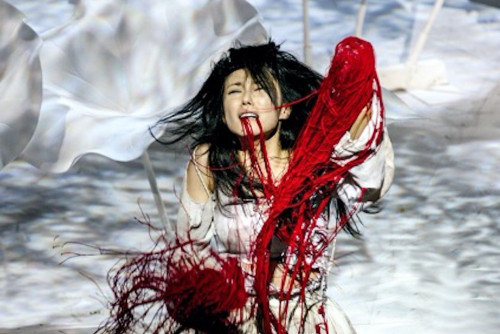
This class will consider the plays written by Shakespeare before 1600 as cultural artifacts of Elizabethan England; as scripts that have truly only lived, and continue to live, in performance; as an ongoing source of inspiration for us as we continue to make culture anew; and as brilliant works of dramatic poetry. The instruction method is guided discussion, sometimes student-led, with occasional brief lectures. While the foundation of our work will always be careful close-reading, we will also pay attention to reception, considering the implications of live performance for our understanding of what Shakespeare might have meant to his contemporaries, and what he continues to mean (and what we make him mean) to us.
TR 11:00 AM - 12:15 PM
Taught by Kelly Malone
ENGL359: Sixteenth-Century British Literature
Not Writing Intensive
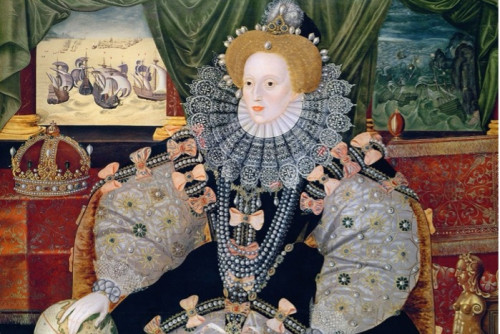
A study of the major sixteenth-century genres, with emphasis on sources, developments, and defining concerns. Readings for Advent 2026 include the lyrics and sonnets of Wyatt, Surrey, Daniel, Ralegh, Sidney, Spenser, and Shakespeare; the mythological verse narratives of Marlowe and Shakespeare; and Books I-III of Spenser's Faerie Queene.
Early Modern English writers, mindful of the continental influences of Renaissance Humanism and the Protestant Reformation, pioneered highly experimental works, blending classical influences with a new, rapidly evolving vernacular. Our focus will be on the ends to which they embraced and developed a self-consciously artificial lyrical style. In the first part of the course, we will read Skelton, More, Sackville, and selections from “emblem books” (a hybrid form combining highly stylized words and symbolic images) to understand both the historical background and aesthetic context of the enduring poetic achievements of Wyatt, Surrey, Sidney, Daniel, Marlowe, and Shakespeare, whose works offer rich and sustained insights into the themes of love, power, duty, religion, and good government (both of the state and of oneself).
As this course follows constructivist, student-oriented principles of teaching and learning, there are no exams or quizzes. Active class participation and group work (“capers”) are vital to your success in this course. In addition to regular homework assignments, there is one Independent Presentation Project, two cumulative and summative projects, and several imitatio exercises. A good time will be had by all.
M 7:30 - 10:00 PM
Taught by William Engel
ENGL373: Victorian Prose and Poetry
Not Writing Intensive
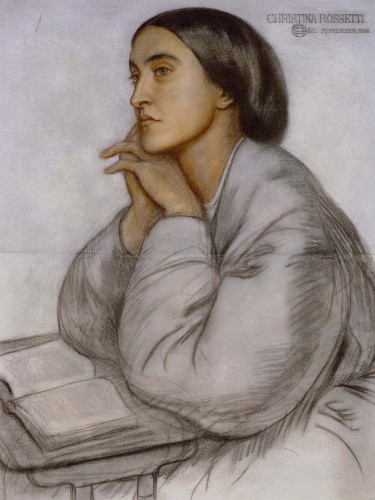
Victorian literature is famously preoccupied with the past: memory and personal experience, national history, nostalgia, and repressed trauma. At the same time, Victorian culture encouraged a robust faith in various visions of progress: the possibility of self-determination, advances in science and technology, and the growth of England as a nation. In this survey of Victorian poetry and non-fiction prose, we will read works of literary and intellectual significance by writers whose preoccupations ranged widely—from romantic desire to evolutionary science, from religious belief to the rise of capitalism. Yet they all grappled with the relationship between art, individuals, and the ever-changing society they inhabited. As we put these fascinating works in dialogue with one another, we will pay special attention to their representations of individual and collective pasts, presents, and futures.
Texts include poetry by Alfred, Lord Tennyson, Elizabeth Barrett Browning, Robert Browning,
Matthew Arnold, Algernon Swinburne, Dante Gabriel Rossetti, Christina Rossetti, Gerard
Manley Hopkins, and Thomas Hardy, as well as essays and non-fiction prose by Thomas
Carlyle, John Stuart Mill, Friedrich Engels, Charles Darwin, Matthew Arnold, John Ruskin,
William Morris, and Oscar Wilde.
MWF 11:00 – 11:50 AM
Taught by Maha Jafri
ENGL377: American Literature: Beginnings to 1855
Not Writing Intensive
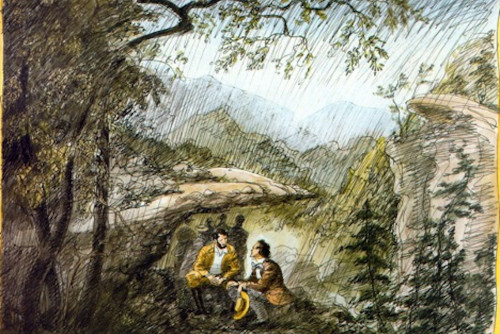
This course, the first half of the two-semester survey of American literature before the twentieth century, begins with the earliest writings in English by European explorers and colonizers and follows the slow emergence of distinctive political, moral and literary traditions that were recognizably American. It thus features, along with poetry and fiction, a good deal of nonfiction writing in the form of essays, memoirs, and sermons. The course culminates with the period usually called “the American Renaissance,” a thirty-year span just before the Civil War in which internationally important works were created by such writers as Ralph Waldo Emerson, Edgar Allan Poe, Frederick Douglass, Nathaniel Hawthorne, Herman Melville, and Walt Whitman.
TR 9:30 - 10:45 AM
Taught by John Grammer
ENGL396: American Environmental Literature
Not Writing Intensive
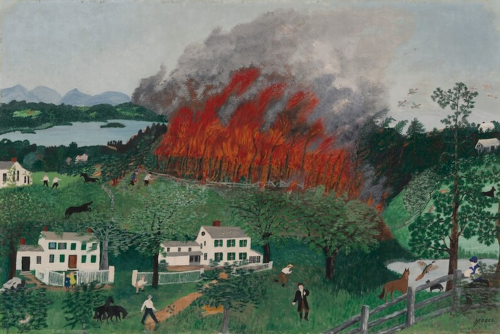
This course is a study of the American environmental imagination. We'll explore how the natural world serves as a testing ground for our understandings of nation and region; of identity and individualism; and of contested pasts and precarious futures. We'll discuss nonfiction, fiction, and poetry from the nineteenth century to the present, from Thoreau and Emerson to Karen Russell and Camille Dungy.
TR 3:00-4:15 PM
Taught by Heidi Siegrist
ENGL399: World Literatures in English
Women's and Gender Studies; International and Global Studies (Global Culture and Society)
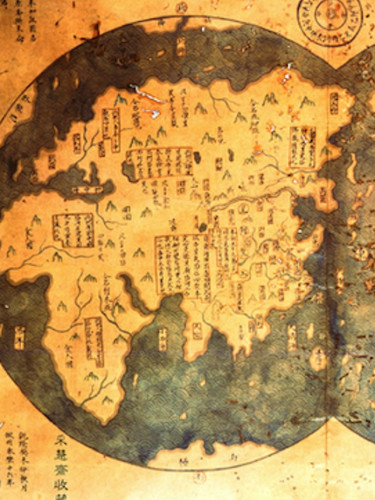
While national or regional designations—British, American, or Southern, for example—often shape the fields of English literary study, this course is organized around literature that emerges from societies that have been affected by British colonialism. The course introduces the challenges of defining and reading such varied literatures while pursuing the central questions, concepts, and debates in postcolonial Anglophone literary study through reading poetry, drama, essays, and fiction from the Caribbean, Africa, and South Asia. This includes works from Derek Walcott, Jamaica Kincaid, Chinua Achebe, Wole Soyinka, Tsitsi Dangarembga, Nadine Gordimer, J. M. Coetzee, Salman Rushdie, Arundhati Roy, and Chimamanda Ngozi Adichie. The course open with a consideration of the possibilities and perils of writing in English: how can these authors adapt the English language and its literary expressions to new rhythms of speech, new forms of expression, and new modes of thinking? How do they acknowledge the impositions of British colonialism while representing the diversity of their societies and cultures? To answer these questions, we will explore how these authors view the writing of literature as a world-making activity that theorizes our relationship to history, nature, violence, forgiveness, otherness, and community. Our class conversations will attend to how authors, often risking arrest or exile, turn to literature to develop their ethical, social, and political commitments and to intervene in local and global conversations about gender, race, and national identity. We will take up these considerations while viewing global Anglophone literature as a powerful site for making visible the histories, debates, and forces that continue to shape the contemporary world.
Additional Attributes: International and Global Studies (Global Culture and Society); Women and Gender Studies.
TR 11:00 - 12:15 PM
Taught by Derek Ettensohn
ENGL451: Honors Seminar
Writing Intensive in the Major (GMWI)

An advanced research methods and composition course required for students pursuing honors in the department. The class will introduce students to the process of conducting independent research in the field of English and will provide experience with the most common research tools and methods used by scholars of literary analysis. We will discuss argumentative structures, disciplinary conventions, and work together in a collegial and cooperative environment that gives students experience with scholarly collaboration. Class sessions will be devoted to giving students in-class writing time, offering peer critiques, reflecting on the nature of scholarly writing, and working through exercises to develop and discover students’ individual voices and analytic priorities. In addition, students will work closely with their thesis advisor throughout the term as part of the course requirements, meeting with their advisor regularly outside of class for individual guidance and feedback about their project. By the end of the semester, students will have produced an initial rough draft of their thesis project that will then be revised, under the supervision of their thesis advisor, during the following term.
Admission to the class is granted by the department. To be selected, students must submit an abstract of their intended project over the summer and the department will approve the abstracts they believe will produce successful honors theses.
W 7:30 - 10:00 PM
Taught by Matthew Irvin
Creative Writing Courses
WRIT205A: Beginning Poetry Workshop
Workshop
To write poetry— to as the writer Mark Doty says, translate experience into something resembling adequate language— is an act that requires rigorous vulnerability, a commitment to growth and discomfort, a belief in something a little like magic, and a devotion to language itself. In this class, students will begin to establish and explore their own poetic practice from the ground up. They will: 1) Read and write poems in a variety of forms and shapes. 2) develop a shared vocabulary for talking about poetry as a craft. 3) Practice drawing connections between the texts they read and their own creative work. 4) Respond diligently and inventively to the work of their classmates, both verbally and in writing, and in doing so become more effective artists and communicators.
M 1:30 - 4:00 PM
Taught by Molly McCully Brown
WRIT206A: Beginning Fiction Workshop
Workshop
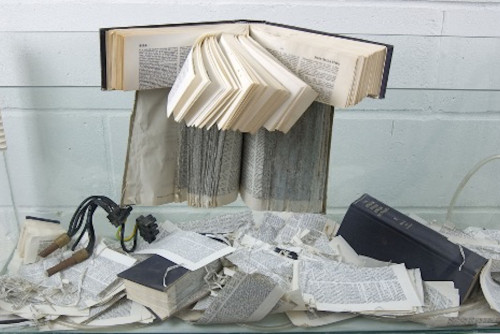
This course serves as an introduction to the nuts and bolts of fiction. Essentially, we will concentrate on how narrative works rather than what it means: as useful in helping beginning writers learn to read in a new way, namely as a writer, so as to write more proficiently. The author, R.O. Kwon has said that reading is almost more important than the writing itself for a working writer. I agree. In order to write well one MUST read well and extensively. I’d posit that there is a science to understanding how a story works, what its architecture is, and we will unpack that notion in class. This will create an awareness of the structures and strategies available in reading and writing contemporary work. Emphasis is given to understanding craft, producing original work, revision, as well as reading and discussing the works assigned and critiquing each other’s work.
T 7:30 - 10:00 PM
Taught by Misha Rai
WRIT206B: Beginning Fiction Workshop
Workshop
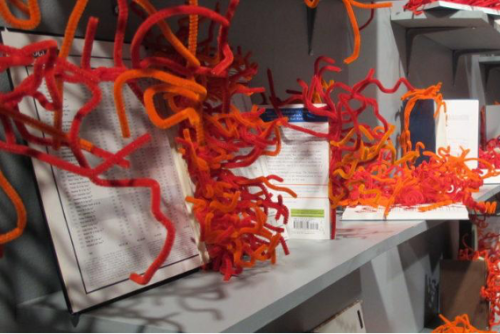
How do we tell stories that matter? How do we make our voice heard in a way that connects us to the larger world?
If you’re interested in storytelling, the Beginning Fiction Workshop provides you with the opportunity to develop your skills, study unique and diverse stories from contemporary literature, and share and discuss creative work amongst a group of students in a welcoming space. The primary goal of the course is to help each writer find their own particular voice while utilizing distinct elements of craft. The beginning workshop allows for students to generate multiple stories over the course of the semester, and over the course of the semester we will develop a common language so we can discuss these stories with sensitivity, specificity, and generosity.
T 1:30 - 4:00 PM
Taught by Kevin Wilson
WRIT207: Beginning Playwriting Workshop
Workshop

Whether you are a fiction writer interested in improving your dialogue, a poet who wants to explore narrative, a theatre geek who wants to see their work come to life, or someone simply interested in trying something new, Beginning Playwriting Workshop is an excellent opportunity to explore dramatic writing in a safe and supportive environment. Emphasis is placed on promoting growth as a writer. A variety of foundational texts are read in order to develop an understanding of basic dramatic structure. Weekly writing exercises are assigned to work in concert with the plays we read.
W 2:00-4:30 PM
Taught by Prof. Meaker
WRIT211: Forms of Fiction
Forms Course
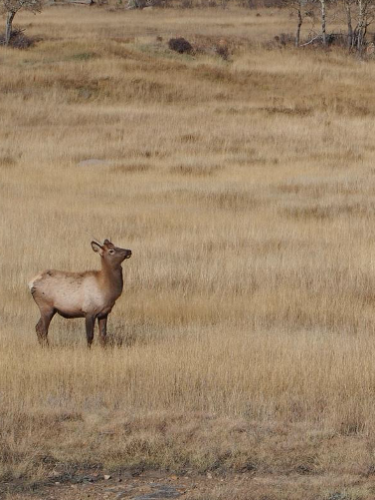
Why study and write the novella? The novella, unlike the novel, is wieldy enough to be imagined, written, and workshopped over the course of a semester. Similarly, its form, and literary merit can be examined in some depth over 15 weeks. Shorter than a novel—between 18,000 and 25,000 words—but longer than a traditional short story—really, the middle child of the word count world—the novella, or as some might cheekily call it “the short novel,” is the perfect form to practice writing long form fiction—be honest, you’ve been working on a novel since you were 12 and you’re convinced that this particular “novel” needs another form to fit into, one that allows you to actually finally finish a complete draft!—so this seminar will be devoted to making that happen. In this class we will examine the three-act story structure, elements that go into crafting an outline, and endings. We will give careful consideration to cultivating the following aspects of fiction in our own writing: how to develop major and minor characters, how to utilize different point-of-view strategies, how to develop acute and chronic tension and how to maintain these two types of tension to keep a reader engaged in the story, how to establish and utilize the setting a story takes place in, how to sustain voice, how to deploy subtext and stage desire in extended scenes etc. We will read, read, read because as R. O. Kwon said, reading is as much, if not, more important than writing! We will feet-to-the-fire (you gotta take the class to find out what this is) every week and eat sadness pizza as we make certain that none of us share the fate of the deer featured in the photograph!
T 1:30 – 4:00 PM
Taught by Misha Rai
WRIT250: Queering the Page
Elective course
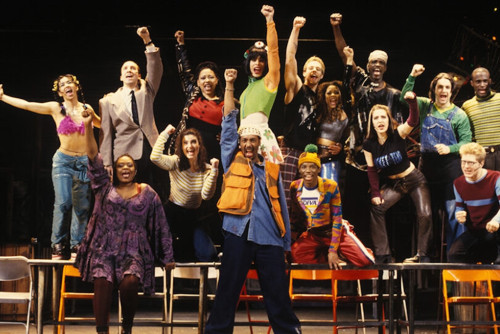
This course is focused on crafting queer plays through an examination of queer playwrights and theorists, culminating in the creation of a student-written glossary of terms defining words like “queer” and “plot,” as well as a creative work.
T 1:30 - 4:00 PM
Taught by C. Meaker
WRIT405: Advanced Poetry Workshop
Workshop
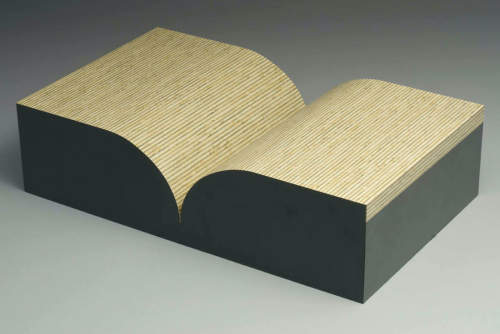
Over the past fifteen years, contemporary poetry has witnessed a radical expansion in the number of so-called “project” books: poetry collections that depend on the recurrence of specific speakers, lyrical spaces, and thematic content to build worlds and/or narratives across a sequence. This course will examine how several contemporary “project” books generate their unique lyric and narrative worlds, and how readers encounter poems individually and together. In it, students will explore and practice the poetic forms that undergird recent poetry collections; discuss how newly published project books function; and write and create a linked poetry sequence of their own. This course is a writing workshop, scaffolded by reading. Throughout the semester you’ll share work-in-progress with the class— as a whole and in smaller groups— and get feedback from both peers and your professor. Open only to students pursuing programs in creative writing.
W 2:00 – 4:30 PM
Taught by Molly McCully Brown
WRIT406: Advanced Fiction Workshop
Workshop
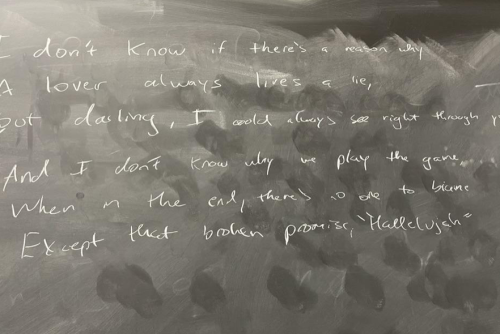
In the advanced workshop, students focus on their capstone project, sharing that work with peers in a workshop setting. The course requires students to work with the professor to develop specific reading lists with the goal of shaping their own capstone project. The primary focus of the workshop is the creation and critique of their own work and the work of their peers. Open only to students pursuing programs in creative writing.
R 1:30 - 4:00 PM
Taught by Kevin Wilson
WRIT407: Advanced Playwriting Workshop
Workshop
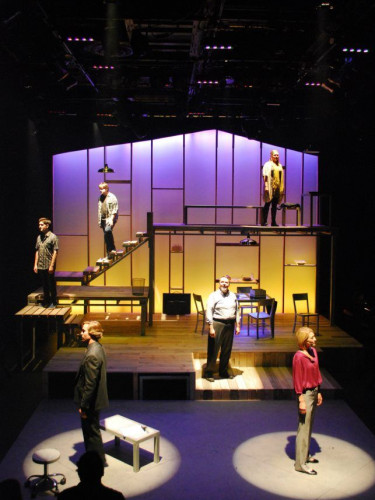
In the advanced workshop, students focus on their capstone project, sharing that work with peers in a workshop setting. The course requires students to work with the professor to develop specific reading lists with the goal of shaping their own capstone project. The primary focus of the workshop is the creation and critique of their own work and the work of their peers. Open only to students pursuing programs in creative writing.
M 2:00 – 4:30 PM
Taught by Prof. Meaker