“I know everyone loves their college, but I’m so proud to have gone to Sewanee. That’s really why I give—because it was the best four years of my life.”
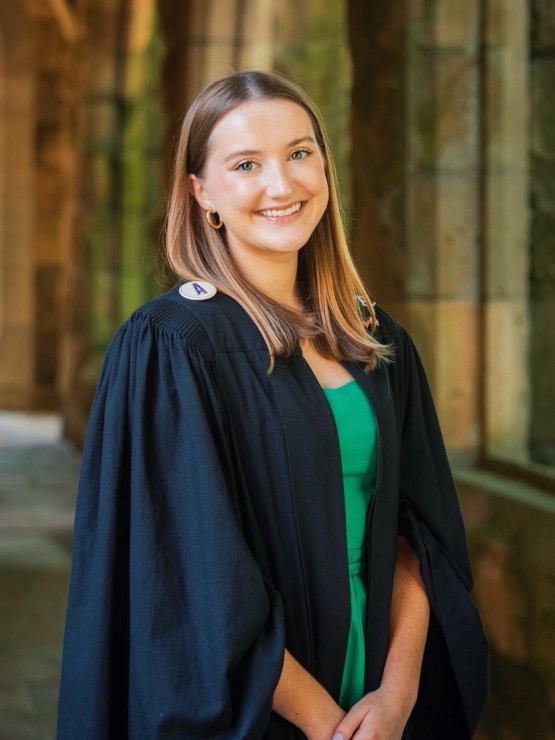
Anne Mitchell Welch, C’22, has plenty to say about her Sewanee experience, and she’ll happily chat about any other topic, too. “I’ve always been a pretty loud person—or a talkative person,” she says. Growing up in Mountain Brook, Alabama, she participated in her high school’s debate team, and in Youth in Government, a civics club sponsored by the YMCA. Through these organizations, she got to know William Chandler, C’20, and Henry Hamlett, C’20, who matriculated at Sewanee and introduced her to the University. “Sewanee was the first school I toured,” she says, “and I absolutely fell in love.”
Welch says she knew right away she wanted to major in politics, but, at Chandler’s recommendation, she also signed up for an introductory rhetoric course taught by Associate Professor of Rhetoric and Chair of Women’s and Gender Studies Melody Lehn. “Immediately, Dr. Lehn and I just clicked,” she says. “We have very similar personalities, and we really related to each other.” Soon after graduating, Welch set up a recurring gift to the Rhetoric Department. She has also contributed to Theta Kappa Phi (TKP), an organization she led as president during her senior year. Welch’s annual support qualifies her for the Breslin Society, a Sewanee giving society open to all alumni but focused on those who have graduated within the past 15 years.
Though rhetoric, as a discipline, is rooted in the works of Greek philosophers such as Socrates and Aristotle, Welch says her coursework covered a broad timeline and varied materials—from Martin Luther King Jr.’s “I Have a Dream” speech to present-day politicians’ social media posts. In one of Lehn’s classes, Welch examined the writings of key figures in the women’s suffrage movement, which, she says, were more nuanced than she expected. “I learned there were women who fought for suffrage, but they only wanted suffrage for white women.”
Given Mountain Brook’s proximity to Birmingham, Welch says she gained an early familiarity with the civil rights movement. She credits her father with encouraging her to educate herself on social injustices, and Lehn’s classes with expanding her knowledge. Through assigned readings, Welch discovered Anne Braden, a white journalist from Alabama who played a central role in advocating for racial equality. Welch wrote an essay on Braden, and, with Lehn’s guidance, developed it into a presentation for the Theodore Clevenger Undergraduate Honors Conference in Greenville, South Carolina. “Three of us [students] wound up going to the conference—all women,” Welch says. “I learned so much from different people there.”
Outside of the classroom, Welch served as a tutor in Sewanee’s Center for Speaking and Listening, participated in the White Ribbon Society, and volunteered with Sewanee Votes!, a non-partisan campus group that promotes voter registration and encourages democratic engagement. For three years, she also led campus tours as an Arcadian—an experience that heightened her appreciation for Sewanee’s friendly community and uniquely beautiful campus, she says. “Even now, when I take my friends to visit Sewanee for the first time, I actually walk them through the tour loop!”
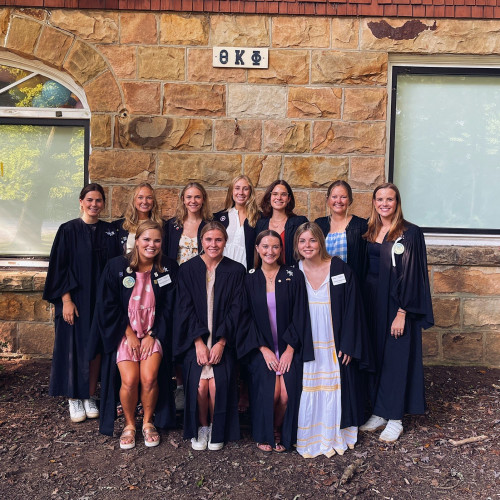
Her primary—and favorite—co-curricular activity, she says, was being part of TKP. “Greek life truly made my Sewanee experience.” Welch says being a TKP officer taught her important leadership skills, such as the ability to delegate and to mediate disagreements. “There’s a lot more [to serving in a sorority] than organizing chapter meetings and telling everyone to drop off an item of clothing for a clothing sale.”
In the summer of 2021, one of Welch’s sorority sisters, Ally Sherwood, C’19, helped her connect with an internship at Drucker Lawhon, a political consulting firm in Washington, D.C. To support her living costs, Welch applied for and received a stipend from Sewanee’s Office of Career Readiness + Student Success. Assisting with political fundraisers gave Welch an introduction to finance and enabled her to network with congressional leaders. It also convinced her she didn’t want to live in America’s capital. “I couldn’t drive in D.C., and I love to drive,” she says. “At that point, I knew I wanted to be in Nashville.”
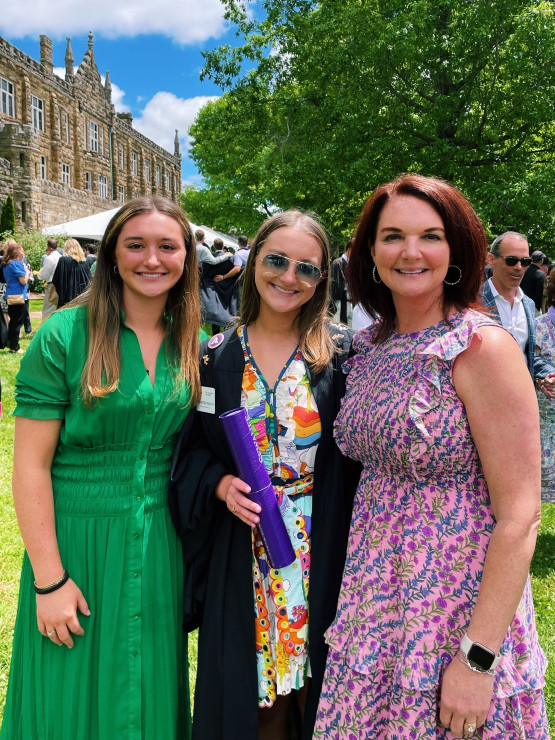
Within two months of earning a B.A. in politics, Welch accepted a position at the Nashville office of Ernst & Young (EY), a financial services firm, and she now works there as an indirect tax analyst. “EY really likes the kids who come from liberal arts schools,” she says, “because we’re proof you don’t need to have a finance or accounting background to understand very technical tax issues.”
Though she often works long hours during tax season, Welch says she enjoys her team and responsibilities. “My favorite times are when we’re outside of our compliance period and ramping down—seeing what went well and trying to improve our processes,” she says. “That’s when I feel like I use my rhetoric minor and my entire Sewanee degree.” She notes that although she’s the youngest person in her department, she’s frequently asked to speak one-on-one with clients and to deliver presentations. “I keep getting good feedback,” she says. “I say, ‘Thanks, I went to Sewanee. They teach students how to communicate.’”

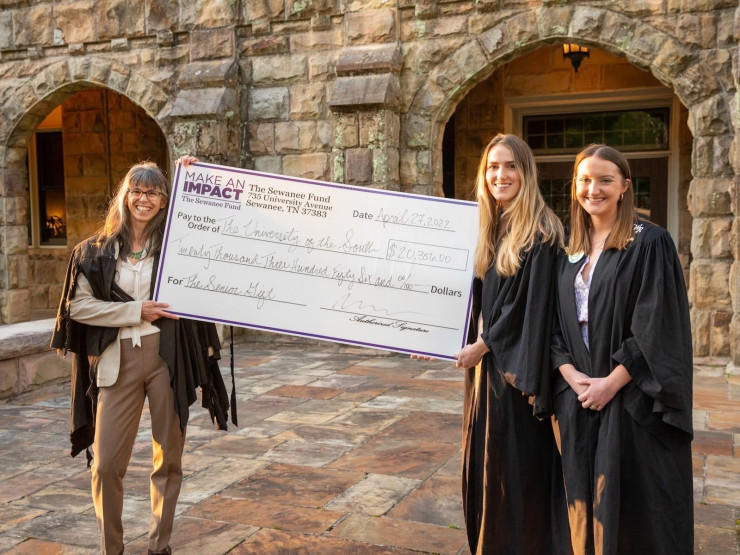
Along with supporting the University financially, Welch has volunteered with the Sewanee Fund since her senior year. Collaborating with Sewanee’s development team has helped her see how donations are used, she says, and has strengthened her Sewanee network. As a class fundraising leader, she focuses on showing other young alumni the impact of their giving. The Rhetoric Department, for example, “needs money to send people to conferences,” Welch says. Setting up a recurring monthly gift “has been an easy way to give $500 a year without seeing $500 just come straight out of my bank account.”
Living relatively close to the Mountain enables Welch to visit often. She says she always makes it a point to tap the roof of her car when she drives through the University’s gates—and sometimes she gets a little teary. “I just love Sewanee so much,” she says. “I know everyone loves their college, but I’m so proud to have gone to Sewanee. That’s really why I give—because it was the best four years of my life.”