Convocation Address
Dr. Renia Dotson, C’88, shared the below remarks at the Advent Semester Convocation on Friday, Sept. 18, 2026.
Advent Semester Convocation story | Full text of Dr. Dotson's remarks:
Thank you, Vice-Chancellor Pearigen, and good afternoon to you, Provost Wilson, deans, faculty, staff, students, and everyone joining us for the celebratory ceremony.
First and foremost, congratulations to everyone receiving awards and gowns today. What an honor and accomplishment!
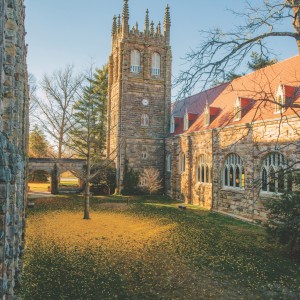
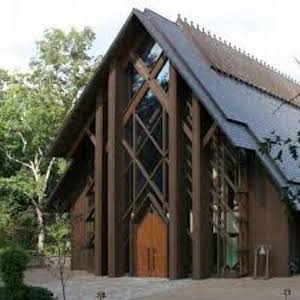
This spring, I had the privilege of speaking at the Benjamin Network Gala. In those remarks, I spoke about "uncommon sense" and how Sewanee is deeply rooted in uncommonness. We know that this place we fondly call The Domain is itself uncommon—so much so that The Princeton Review recently named it the most beautiful campus in the country. And here, in All Saints’ Chapel, we stand in an uncommon space. It is a striking juxtaposition: a breathtaking sanctuary with magnificent stained-glass windows that speak to an entangled past while upholding the sacred promise of our motto, Ecce Quam Bonum, “Behold how good.”
This is also an uncommon moment. It is rare for a sitting chair of the Board of Regents to be invited to deliver the Convocation address. Standing before you as the first African American to hold this role makes the moment rarer still, and it speaks to the bold, uncommon vision of our vice-chancellor. Thank you, Vice-Chancellor Pearigen, for this incredible honor, and I hope that my remarks will not send you searching for your common sense.
It is a good thing that The Princeton Review, Southern Living, Garden & Gun, Travel + Leisure, and others can see what those of us who have lived, worked, or studied on this Mountain have always known. However, as the saying goes, beauty is only skin deep. Sewanee is indeed a beautiful place, but beauty without truth is simply nostalgia.
Sewanee is indeed beautiful, with vibrant foliage in the fall and blooming dogwoods in spring, but it also has a history that requires honest confrontation. I am proud of my alma mater for taking the crucial step of confronting truth. The groundbreaking work of The Roberson Project on Slavery, Race, and Reconciliation, named for our first tenured African American faculty member, Dr. Houston Roberson, laid bare the full measure of our past. That research became the catalyst for the Board of Regents’ landmark 2020 statement acknowledging that:
“The University of the South was long entangled with, and played a role in, slavery, racial segregation, and white supremacy—forces that found particular and painful expression in the Confederacy and, later, in the ‘Lost Cause’ mythology of the white South.”
Beauty accompanied by truth is stewardship. This definition of stewardship goes far beyond a financial construct (crucial as that remains). It becomes a moral, communal, and generational responsibility from which none of us are exempt.
In January 2021, I spoke at a virtual convening of Beyond the Gates when our nation was reeling from a global pandemic and deep social division—not unlike today, minus the pandemic. I spoke of the cognitive dissonance of being an African American student, and later an alumna, of a University founded explicitly to uphold a slaveholding culture. At the time, I noted that reconciliation is an active process—one we must revisit continuously.
While my own journey on this Mountain was marked by determination, I know that for many African American alumni, the strain of that cognitive dissonance left real, enduring scars. In moments of such heavy history, Mr. Rogers famously advised us to "look for the helpers." When I was given the chance to address the Benjamin Network, I did just that.
The Roberson Project's truth-telling helped me discover the "uncommon sense" of the nine faculty members, including the chaplain and chair of the Religion Department, who chose moral integrity over institutional comfort, rather than supporting the exclusion of African American students in the School of Theology. I saw that same spirit in our 2020 Board statement, which rejected Lost Cause mythology in favor of an urgent institutional reckoning. And we see that legacy continuing today under Vice-Chancellor Pearigen, who recently reminded us that in a deeply fractured world, Sewanee’s commitment to unity, community, and the common good has never been more vital.
To live into that commitment, we must be willing to ask hard questions.
When Frederick Douglass delivered his famous 1852 address, he challenged his audience to look past the pageantry of independence to confront the truth of their nation. But like Douglass, holding space for hard truths does not mean abandoning hope. It means actively working to fulfill a promise.
So today, on this Mountain, each of us must ask Douglass’s essential question in our own time. What is Sewanee to us, and what is mine to do?
We must move past the narrow definition of stewardship as mere financial donation or institutional preservation. (Now let me be clear: Sewanee needs, appreciates, and will accept your financial gifts!) But true stewardship requires more intention. It is an active, moral obligation rooted in truth-telling—a shared commitment to leave this Mountain better than we found it. We are the stewards of this community! Whatever this community becomes next is on us.
So—The question facing each of us today is simple: What is mine to do?
To our Students: Whether you are a first-year finding your place, a sophomore claiming your space, or an upperclassman building a lasting culture, your charge is to plant trees under whose shade you may never sit.
To our Faculty and Staff: We count on you to be the guardians of truth, to insist on academic rigor, and to teach our students and the greater community how to navigate the uncomfortable realities of history and growth.
To our Alumni and Church Leadership: We look to you to refine, reconcile, and lead. True loyalty to Sewanee means confronting history—without deflecting.
True loyalty to Sewanee is taking ownership and modeling the moral courage of Ecce Quam Bonum. As our 2020 Board statement reminded us, discomfort and pain can become the wellsprings of genuine transformation.
In closing, I am reminded of that great African American hymn:
“By and by, when the morning comes,
When all the saints are gathered home,
We will tell the story of how we’ve overcome,
And we’ll understand it better by and by.”
We stand today in the “by and by” of those who came before us. And one day, others will stand in the “by and by” of the choices we make here on this Mountain.
I hope that when they look back, their understanding of us will be this:
That we told the truth.
That we widened the circle.
That we stewarded this Mountain with courage.
And that we chose uncommon sense.
Stewardship is the bridge between Sewanee’s past and its promise. The question before each of us is simple: What is mine to do?
Thank you.