It's time to start thinking about the courses you might take in your first semester at Sewanee, and we've gathered everything you'll need right here.

Find Your Academic Passion

steps to completing your Course Preference form:

Step 1: Watch the above video!

Step 2: Review our Frequently Asked Questions below.

Step 3: Become familiar with the courses available to you. Look over all the available courses for incoming First-Year Students or Transfer Students. Also, you'll want to review Sewanee's General Education curriculum, but you do not need to be particularly concerned with finding courses that fulfill a General Education requirement: the foundational courses for every major as well as your Encounter course all meet Gen Ed requirements. By default, you'll end up taking multiple classes that apply to the Gen Ed curriculum!

Step 4: Develop your list of courses of interest to enter on your Course Preference Form; the goal is to build a bank of 10 courses, not including your language interest(s) and your Encounter preferences. This worksheet LINK will help you prepare your Course Preference Form. It guides you through the steps you'll take and helps explain the different categories of classes you'll take:

  • Areas of clear academic interest: First, Review the online Academic Guide to learn more about what to expect of your academic experience at Sewanee, the resources we offer, and details of our academic programs. This section has three parts:
    • Pre-health or Pre-engineering: students committed to a pre-health or pre-engineering track will indicate their focus (and doing so will pre-populate courses in your list). Those not pursuing pre-health or pre-engineering (the majority of students) will indicate so.
    • Area of academic interest (potential major): You'll select an area of genuine academic interest; each recommends a course (occasionally two) to include in your list of courses. Follow that recommendation! Note that for some disciplines, you'll have options; for example, a student interested in Anthropology will have a choice of Anthropology 104, 106, or 109.
    • Area of second academic interest (optional): Can't decide on one area? You can pick a second one.
  • List of ten courses of interest: Here's where you pick the range of courses that you're interested in taking. Note that you're picking courses--not specific sections (not day or time or instructor).
    • If you picked a pre-health or pre-engineering track, one or two courses will be pre-populated.
    • Using the pull-down menu, add the course(s) associated with your area of academic interest(s). (Don't duplicate courses: if a course was already pre-populated, don't repeat it.)
    • Then complete your list by selecting classes from the pull-down menu. It is lengthy, so take your time in building your worksheet to make it easier to add the classes to your Course Preference Form. Important notes:
      • You need to list the courses in your order of preference; the registration program will start at the top of your list and work down!
      • Be diverse in your selections. No more than three courses should come from the same discipline.
      • Students interested in introductory Chemistry and Mathematics will be placed, so the options read "CHEM 121/151 by placement" and "MATH 101/102/207 by placement."
      • Be intentional in your selections: any course you include could be on your final schedule.
      • Do not duplicate courses on this list; the registration program will reject entries with duplicate courses.
      • However, you can list a course that's also on your Encounter list, as we will offer both "regular" and "Encounter" sections of BIOL 133, CSCI 157, ECON 120, ENST 101, SPAN 299, and WRIT 206.
  • Foreign language: You'll want to pick two (or three) language options, in order of preference. Your placement in each language will be reflected on the pull-down menu. Sewanee's General Education includes a requirement to demonstrate mastery in a foreign language, so nearly all students take a language course in their first semester.
  • Encounter preferences: You are not updating this list; your preferences are listed to remind you and assist you with the process. 

Step 5: Beginning June 8, you can complete and submit your Course Preference Form on your Applicant Status Page. The form is due June 30--we will begin the process of building schedules July 1!

Need help with the Course Preference Form?

Schedules are made available in early August. Students will meet with their assigned faculty advisor during opening weekend at the end of August at which time they may discuss their schedules and will be eligible to make changes, if desired.

    Academic Guides

    The Office of Advising will build you a balanced schedule of four classes for your first semester. They will do so based on the preferences and interests you express on your Course Preference Form (CPF), and will also keep information in mind from your academic inventory, student life requests, athletics, and more. In early August you will receive an email announcing that your schedule is ready to be viewed with instructions on how to access it. As you work through the CPF, be sure to check the Frequently Asked Questions for help.


    Academic Guides are faculty who are available in June to answer any questions you have about completing the Course Preference Form and Sewanee's curriculum. While these faculty members have their own areas of specialty, they are all experienced advisors who are qualified to discuss all areas of our curriculum. Beginning in June, you can email the Guides or set up an appointment to ask questions or receive assistance.


    Transfer students should email Alexander M. Bruce, Associate Dean of the College for Undergraduate Academic Affairs and director of advising, at ambruce@sewanee.edu to schedule a consultation.
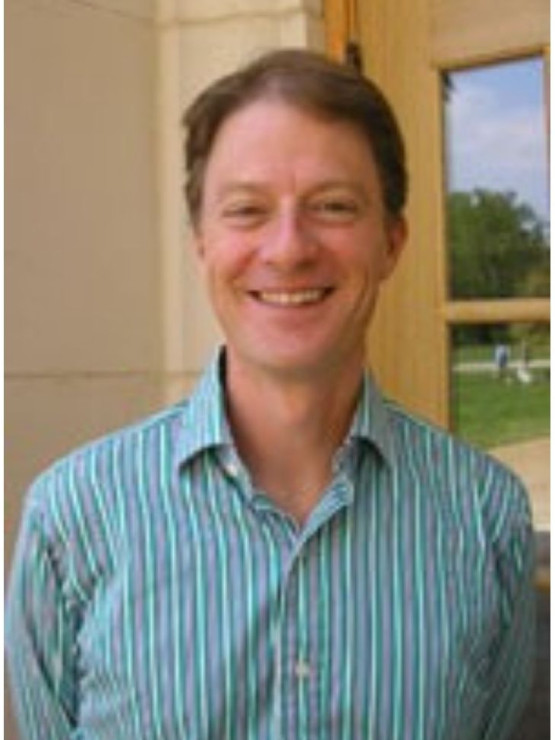

    For this year, your Academic Guides are:

    Robert Bachman, F.B. Williams Professor of Chemistry

    Robert Bachman holds a B.A. and Ph.D. in Chemistry from Rice University with a focus in inorganic, organometallic, and organic chemistry. Professor Bachman's current research focuses on the construction of new metal-containing liquid crystalline materials with potentially useful physical properties. A veteran academic advisor with extensive experience working with incoming students, Dr. Bachman can offer advice to students interested in any discipline (and students interested in Chemistry or Physics or any of the 3/2 programs should seek him out).

    Chris Shelley, Associate Professor of Biology, Director of the Neuroscience Program

    Chris Shelley holds a B.Sc. in biochemistry from Imperial College London and a Ph.D. in pharmacology from University College London. Shelley's research broadly focuses on the molecular basis of behavior. Recently, his lab has begun to utilize sea urchins as an experimental organism, with the aim of elucidating the electrical and biochemical steps that underlie sea urchin behavioral responses to light. Dr. Shelley serves as a Faculty Fellow for Advising and has years of working with first-year students; he can assist students interested in any discipline (and students interested in Biology, Psychology, or Neuroscience should seek him out).

    Summer Support from the Office of Advising

    Question and Answer Session: Course Preference process

    Dr. Alexander M. Bruce, Associate Dean of the College for Undergraduate Academic Affairs and Director of Academic Advising, will guide students through the process of indicating course preferences on the Course Preference Form. In this process, students are asked to note their top academic interests, to select other courses of particular interest, and to rank their language choices. The information is essential for helping students make choices that are equally informed and of personal interest. The Zoom link for this session will be added to this page in May.