This semester’s CEL fellows led community-engaged courses that paired hands-on learning with meaningful local partnerships. Students worked on projects ranging from environmental justice and archival research to nonprofit communications, strengthening community ties while building real-world skills.
Another semester ends, and a new group of enthusiastic CEL fellows has completed their community engagement courses. With support from OCE, the Bonner Foundation, the McCrickard Fund, and the Office of the Chaplain, Molly Brookfield (History and WGS), Lisa Burner (Spanish), Melody Lehn (Rhetoric and WGS), and Teri Terigele (Psychology) have experienced the pedagogical benefits of this teaching approach, while their courses have helped expand and strengthen Sewanee’s community partnerships.
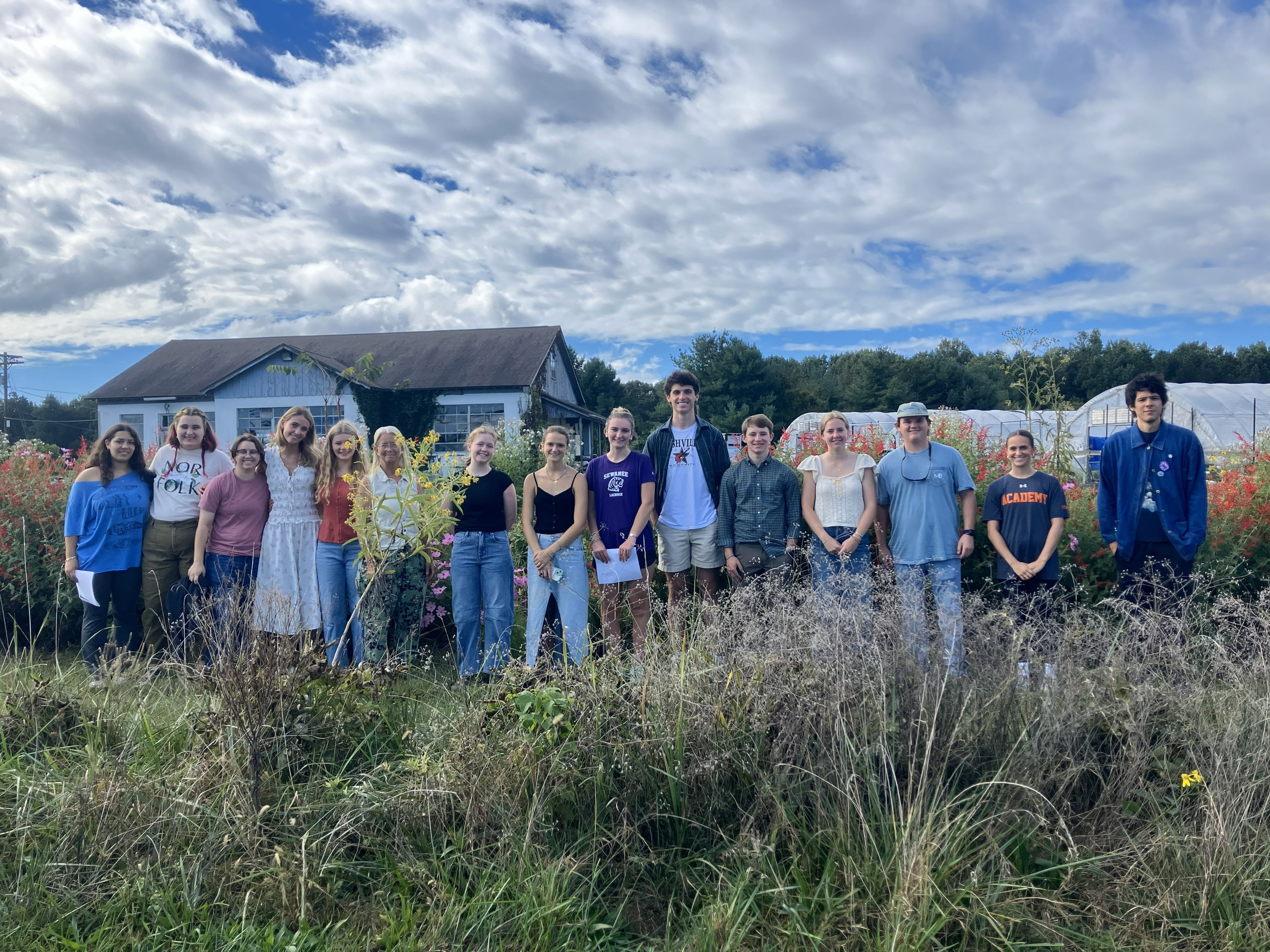
Lisa Burner (Spanish) taught ENST 200: Introduction to Environmental Arts and Humanities. In collaboration with the nonprofit urban farms Crabtree Farms and The Bethlehem Center in Chattanooga, along with the University Farm and the Office of Environmental Stewardship & Sustainability, students in Burner’s class learned about regenerative agricultural practices, participated in activities like weeding, harvesting, clearing Sewanee’s trails, or volunteering at the Sewanee Farm, and ultimately reflected on food justice. Students discovered how urban farms supply local restaurants and, in the case of the Bethlehem Center, share produce for free to their own food pantry. Other initiatives include community building and environmental awareness through after-school programs, summer camps, and a commitment to regenerative farming amid local environmental contamination and disinvestment. The students reflected on these experiences through the lens of environmental and community ethics, as well as on how agriculture is imagined through art and storytelling. Burner’s class was especially interested in Sewanee’s sustainability efforts, learning how the farm’s produce is served at McClurg, and how food waste from McClurg is composted to enrich the farm’s soil.
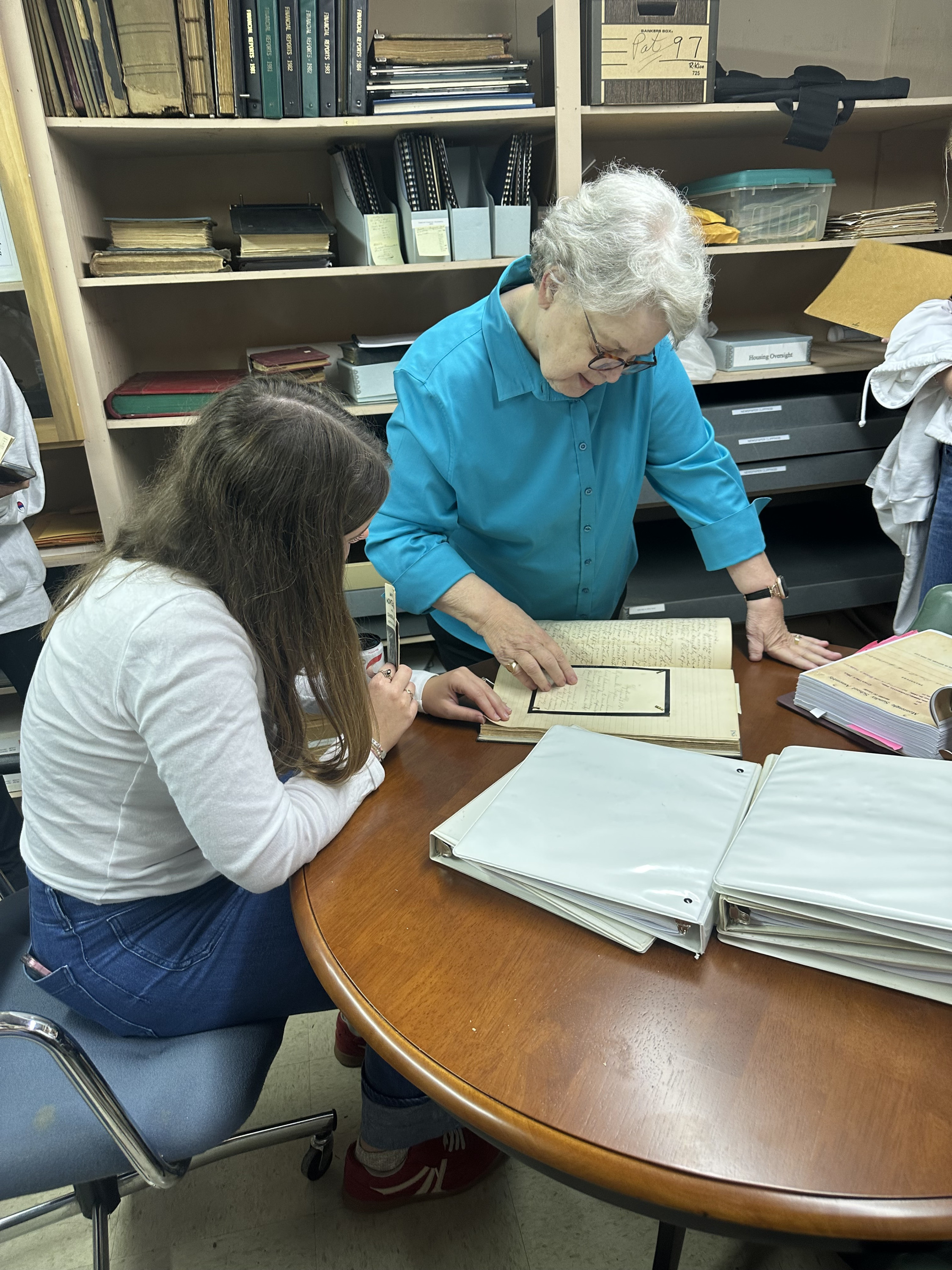
Students in Melody Lehn’s RHET 331: Voices of American Women class collaborated with the Monteagle Sunday School Assembly (MSSA) through a course that combined community service with a multifaceted project focused on research, writing, and public speaking. Lehn’s students studied how MSSA has historically created opportunities for women’s rhetorical and civic participation from 1882 to the present. Specifically, student teams contributed to the MSSA’s digitalization project by curating and scanning for preservation printed programs from the MSSA’s past summer sessions dating back to the 19th century, paying close attention to the presence or absence of women in roles such as invited lecturers, teachers, and artistic performers. They also chose an “MSSA woman rhetor”—examples from the 19th and 20th centuries, like a suffragist, a physical education advocate, a culinary educator, a physician, a temperance leader, and a New Deal-era feminist judge—as the focus of a semester-long inquiry into recovering and publicizing an important speaker’s rhetorical and civic contributions. At the end of the semester, students delivered public presentations sharing their findings, demonstrating their ability to communicate effectively to both scholarly and general audiences. The profiles of these women will be compiled into the first issue of a print and digital magazine, which could be expanded in later course offerings. A shorter version will be featured in MSSA’s summer newsletter, helping to promote its rich history and the vital role that both local and visiting women rhetors have played in shaping it.
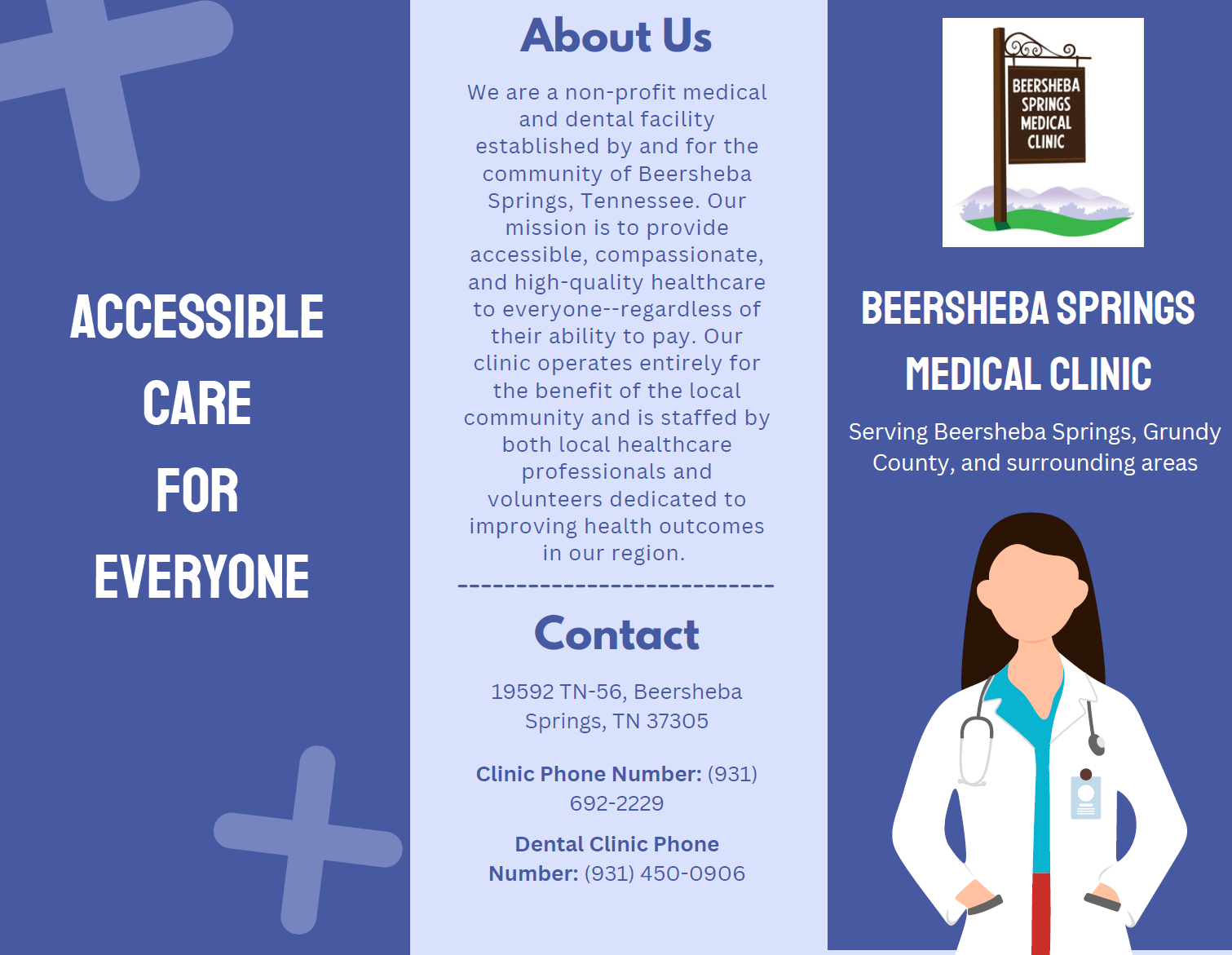
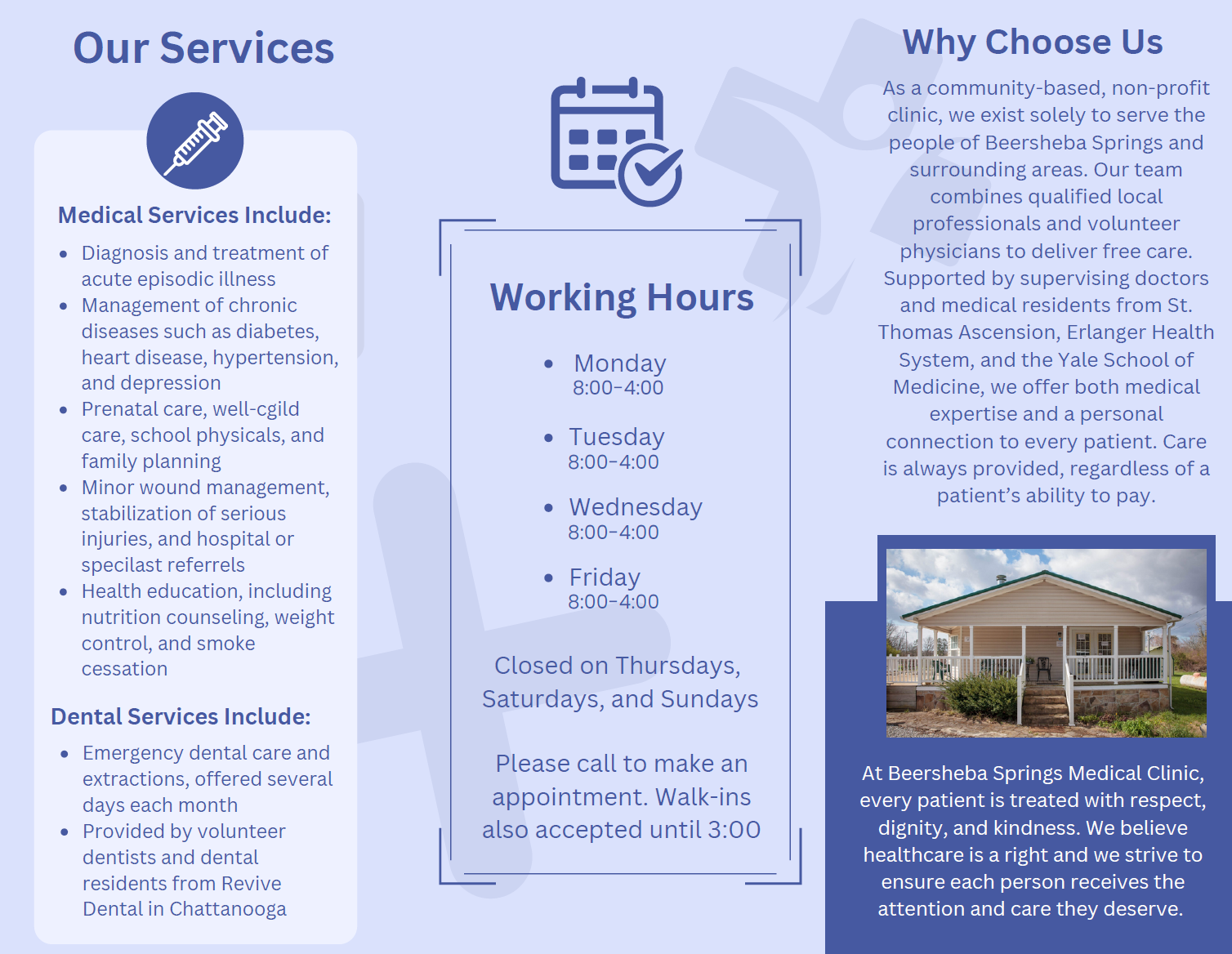
Teri Terigele’s PSYC 490: Communicating Psychology immersed students in digital communication, exploring practical, cost-effective AI tools to support administrative tasks for smaller nonprofits across various settings. Working on real-world projects with four community partners, students helped create impactful promotional materials and enhanced social media presence. Terigele’s class exemplifies how CEL courses work with different partners and their diverse needs to develop their learning strategy, and how they can also serve as career-readiness opportunities. Partners included the Beersheba Springs Medical Clinic, the SETHRA Transit Team, the Community Action Committee, and the Sewanee Fire Department. Among other projects, students produced a brochure to introduce the Beersheba Springs Medical Clinic’s services, designed a flyer for its fundraising event, and created outdoor signage. With SETHRA, students developed a new logo, laminated passenger information sheets, and designed a brochure outlining transportation services for the community. Collaborating with the Community Action Committee, students built a sense of community by connecting with local restaurants for food donations and establishing new partnerships with student organizations. They also contributed to the Fire Department’s social media by recording an interview with a student volunteer firefighter, creating Instagram posts for October’s Fire Safety Awareness Month, and drafting a social media policy for Facebook and Instagram operations. At semester's end, students and community partners shared insights on tools to enhance social communication and administrative strategies in an AI workshop, reflecting on the lasting impact of this CEL partnership.
This array of collaborations demonstrates the rewarding versatility of CEL courses. In Lehn’s words, “CEL invites initiative from students, who bring wonderful amounts of energy and creativity to the classroom.” These examples of meaningful learning aim to inspire the design of other Sewanee courses, ultimately fulfilling Sewanee’s commitment to surrounding communities.